Not long ago, it would have been difficult to imagine a human heart being repaired robotically through small incisions. Robotic instruments, guided entirely by a surgeon’s own hands, operating on one of the most vital organs in the body through small openings. A future that once seemed decades away. That future existed in only a handful of hospitals worldwide. Now, it is part of what some Doctors can deliver in Dubai.
Key Takeaways
- At American Hospital Dubai, a 60-year-old man with mitral valve disease underwent Dubai’s first robotic mitral valve repair.
- The procedure was performed by the hospital’s Cardiac and Thoracic Surgery team using the da Vinci robotic platform.
- Instead of a conventional sternotomy, the team operated through small incisions between the ribs, with the surgeon controlling robotic instruments for enhanced precision, dexterity and visualisation.
- The patient was walking and eating the following day and returned home within three days.
- It is one example of how hospitals across the UAE are investing in advanced technology, specialist services and clinical infrastructure to deliver increasingly complex care.
Why Did This Patient Choose Robotic Surgery?
For a 60-year-old man with mitral valve disease, this technology arrived at exactly the right time. His condition required surgical treatment, but how that surgery would be performed was no longer limited to the conventional approach.
His Doctors presented three options: traditional open-heart surgery, minimally invasive surgery through a smaller incision between the ribs, or robotic mitral valve repair.
He chose robotic surgery.
What Made This a Milestone Built on Years of Progress?
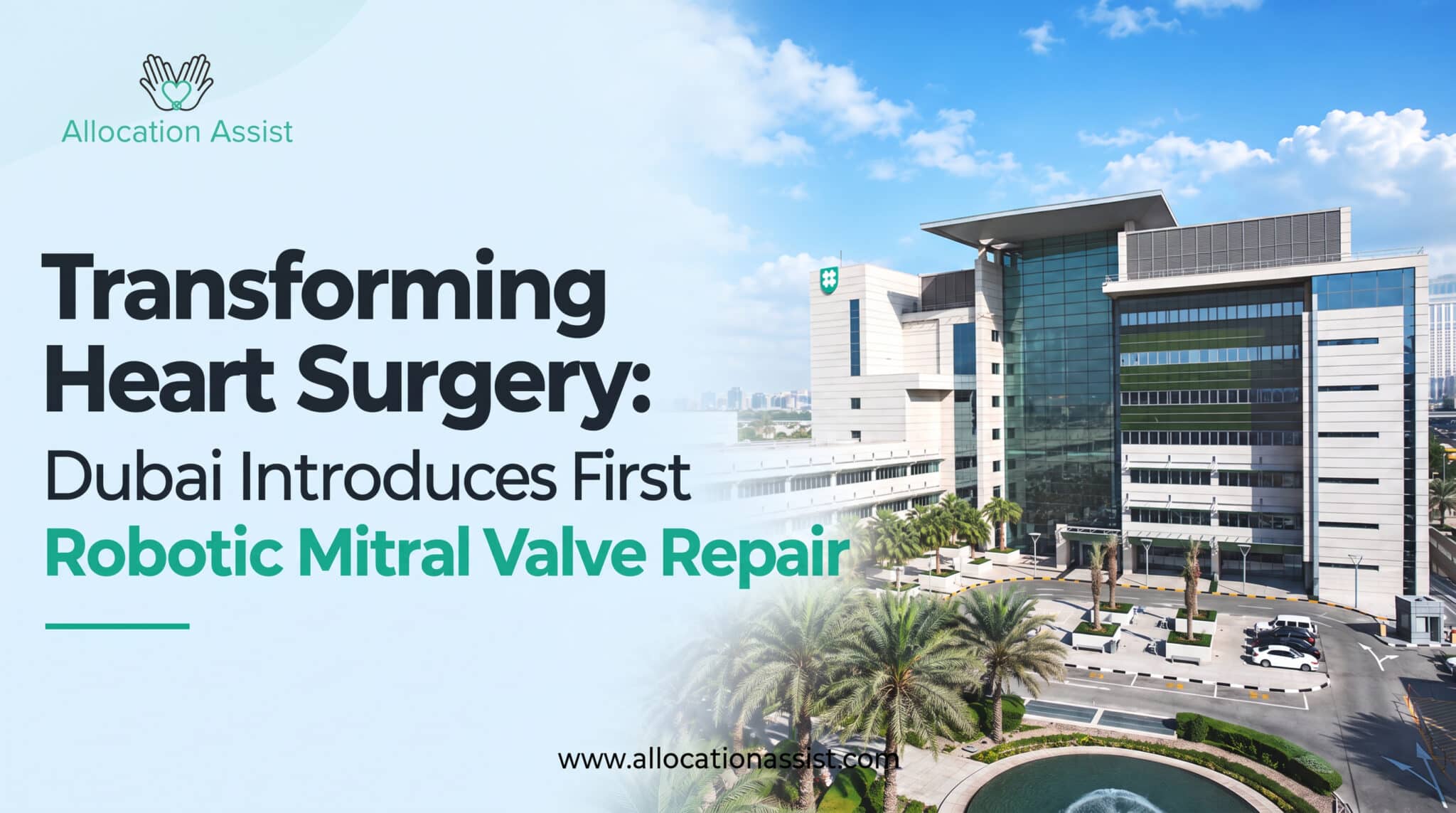
At American Hospital Dubai, that decision became part of a much bigger milestone: Dubai’s first robotic mitral valve repair, performed by the hospital’s Cardiac and Thoracic Surgery team using the da Vinci robotic platform.
Instead of opening the chest through a conventional sternotomy, the surgical team operated through small incisions between the ribs, with the surgeon controlling robotic instruments designed to provide enhanced precision, dexterity and visualisation.
The patient was walking and eating the following day and returned home within three days.
For the patient, it meant another way forward. For the Doctors behind the procedure, it represented something else too: the ability to take highly specialised surgical expertise and practise it in an environment increasingly equipped to support what modern medicine can become.
Will the Environment Keep Pace With the Doctor?
This is a question on the minds of many accomplished Western trained Doctors: Will the technology keep pace with your expertise? Will there be room to introduce new techniques, develop services and push your specialty forward? Will your next role allow you to build on everything you have already spent years learning?
Dubai’s first robotic mitral valve repair is one example of how that environment is already taking shape. Across the UAE, hospitals are investing in advanced technology, specialist services and the clinical infrastructure needed to deliver increasingly complex care. For Doctors arriving with years of experience behind them, that creates opportunities not simply to continue practising, but to contribute to what comes next.
Conclusion
Because sometimes career progression is not another title. Sometimes it is looking at medicine that once seemed futuristic and realising you now have the tools to deliver it. Dubai’s first robotic mitral valve repair at American Hospital Dubai shows what that looks like: a 60-year-old patient given another way forward, walking and eating the next day and home within three days, and a surgical team able to practise highly specialised expertise in an environment built to support it. For accomplished Doctors, it is a sign that the UAE increasingly offers not just a place to keep practising, but a place to push medicine forward.
Thinking About a Move to the Gulf?
At Allocation Assist Middle East, we have introduced more than 500 Doctors to over 95 hospitals across the region, helping Western-trained Consultants and Specialists find opportunities where their experience can continue to grow. If you are a Western-trained Doctor considering the UAE, Saudi Arabia or Qatar, your next move could take you somewhere with the infrastructure, technology and ambition to push medicine forward. A place where your expertise can meet the tools to do more with it. Check your eligibility or Call +971 4 273 3477 today and take the next step in your medical career.
Frequently Asked Questions
What is robotic mitral valve repair?
Robotic mitral valve repair is a way of repairing the heart’s mitral valve through small incisions between the ribs, using a robotic platform such as the da Vinci system. The surgeon controls robotic instruments designed to provide enhanced precision, dexterity and visualisation, instead of opening the chest through a conventional sternotomy.
What happened in Dubai’s first robotic mitral valve repair?
At American Hospital Dubai, a 60-year-old man with mitral valve disease underwent Dubai’s first robotic mitral valve repair, performed by the hospital’s Cardiac and Thoracic Surgery team. He was walking and eating the following day and returned home within three days.
Why does advanced technology matter for doctors moving to the UAE?
Many accomplished Western-trained Doctors want to know the technology will keep pace with their expertise. Across the UAE, hospitals are investing in advanced technology, specialist services and clinical infrastructure, creating opportunities not simply to continue practising, but to contribute to what comes next.
What is mitral valve disease?
The mitral valve sits between two chambers on the left side of the heart, and it is the valve that most commonly develops disease. In conditions such as mitral regurgitation, the valve does not close fully and blood can leak backwards, which can strain the heart and may need surgical treatment.
How does robotic mitral valve repair compare with open-heart surgery?
Open-heart surgery uses a large chest incision through the breastbone, while robotic repair uses several small incisions between the ribs. Robotic repair is generally associated with less blood loss, less pain, a lower infection risk and a faster recovery, with many patients leaving hospital within a few days.