As the country continues to enhance its healthcare system, it has become a prime destination for healthcare professionals looking to advance their careers. The Qatar Council for Healthcare Practitioners (QCHP) plays a pivotal role in regulating medical practitioners, ensuring that high standards are maintained across the industry. This guide outlines the necessary steps for obtaining a medical license, including the licensing requirements, application process, and renewal procedures, ensuring that you are well-prepared for successful practice.
1. Understanding the QCHP License
What is the QCHP license?
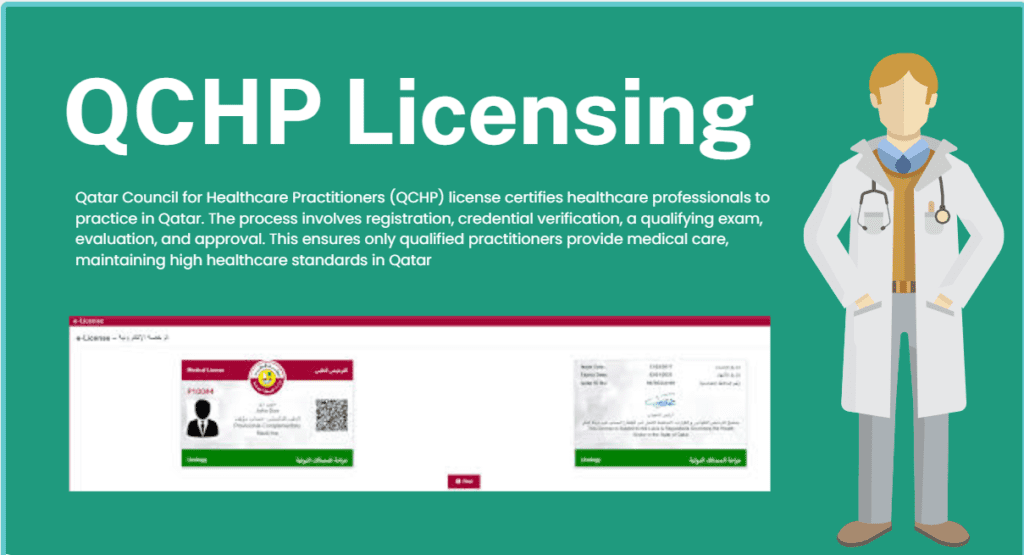
The QCHP is now officially the Department of Healthcare Professions (DHP), operating under Qatar’s Ministry of Public Health (MOPH). Following an administrative restructuring, the Qatar Council for Healthcare Practitioners was reorganised as the DHP, though many applicants and employers still refer to it as QCHP. The underlying system is unchanged: applications run through the Sheryan electronic portal, and credential verification is handled by DataFlow. Whether you see it called QCHP or DHP, it is the same licensing authority. If you are weighing up options across the region, our SCFHS licensing guide for Saudi Arabia covers the equivalent process in the Kingdom.
The QCHP license is a required credential for healthcare professionals to practice in the country. It ensures that practitioners have the proper qualifications and skills to provide safe and effective care. The Council regulates various healthcare professions, such as doctors, nurses, and allied health practitioners, to protect public health and maintain professional standards.
Importance of the License
Having a valid license is crucial for anyone wishing to practice here. It not only fulfills legal requirements but also enhances your professional credibility. Employers and patients alike rely on this credential as proof of your qualifications, ensuring you are equipped to provide high-quality healthcare.
QCHP Licensing Requirements
General Requirements
To obtain a license, applicants must meet specific criteria. Below is a summary of the general requirements for healthcare professionals seeking licensure.
| Requirement | Description |
|---|---|
| Educational Qualifications | A recognized medical degree from an accredited institution. |
| Clinical Experience | At least one year of relevant clinical experience in the specialty. |
| Professional Certifications | Additional certifications or training relevant to your specialty. |
Requirements for Doctors
Doctors specifically must undergo degree verification through recognized institutions. Continuing Medical Education (CME) is also required, with documentation of ongoing education essential during the application process. Additional requirements, such as board certifications or fellowships, may also apply depending on the specialty.
Additional Qualifications
Proficiency in English is generally required and can be demonstrated through tests like IELTS or TOEFL. While not mandatory, knowledge of Arabic can improve communication with patients. Additionally, a police clearance certificate is required to verify the applicant’s legal standing in their home country and any others where they have lived for the past five years.
3. QCHP Registration and Licensing Process
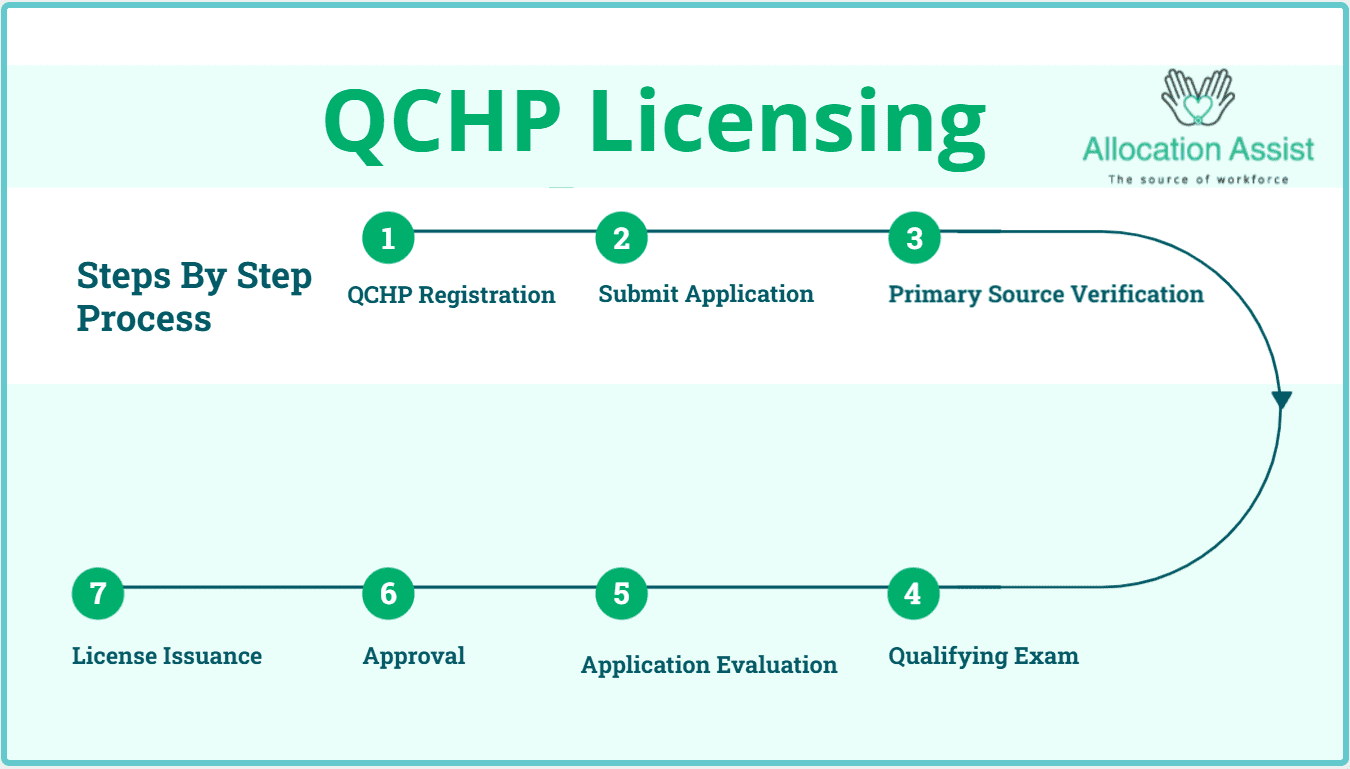
Important 2026 update: As of January 2026, DataFlow Primary Source Verification (PSV) is mandatory for all applicants, with no exceptions. This was introduced under DHP Circular DHP/2025/24. Even if you hold a qualification that previously offered an exam exemption, such as the USMLE, PLAB, or NCLEX, the DHP now requires a completed PSV verification report before your application can be considered. In a related change, from August 2025 the DHP stopped accepting a Certificate of Good Standing by email, and the PSV report is now the approved route. Because DataFlow verification typically takes several weeks, starting it early is the single biggest factor in avoiding delays.
Preparing Your Application
The first step in obtaining a license is gathering the necessary documents. These include your medical degree, clinical experience letters, language proficiency certificates, and a police clearance certificate. Ensure all documents are authentic and, if necessary, translated into Arabic or English. For a full breakdown of each stage, our complete guide to UAE medical licensing walks you through what to prepare and when.
Completing the Application
To apply, visit the QCHP website and create an account. Complete the application form meticulously, ensuring all information is accurate. Attach the required documents in the specified format, ensuring they are clear and legible.
Documents Verification
Once your application is submitted, the Council will begin the verification process for your educational qualifications and clinical experience. This step can take several weeks, so it is advisable to apply well in advance. Promptly respond to any requests for additional information to avoid delays.
Medical License Exam
Most applicants are required to take the Qatar Prometric Exam, which assesses medical knowledge and competency through multiple-choice questions across various disciplines. Proper preparation is crucial; consider utilizing review materials, online courses, and practice exams. If you are also researching where to work, our Qatar hospitals guide covers the major facilities in the country.
Candidates with specific qualifications may qualify for exemptions from the Prometric exam. To apply for an exemption, you must submit relevant documentation supporting your request.
Related Articles :
- Healthcare System in Qatar: Insights for Doctors
- The Future of Doctor Jobs in Qatar: Trends and Opportunities
- Why must you obtain your DHA license before applying for jobs in Dubai?
- Qatar Hospitals Guide
- What are CME requirements in the UAE?
4. License Renewal
Licenses are typically valid for a set period, after which renewal is necessary. Begin the renewal process at least three months before your license expires. The online renewal application requires updated documentation and the payment of a renewal fee.
Maintaining your credential also involves completing continuing education. Generally, you are required to complete around 30 hours of accredited continuing education every two years.
5. License Verification
License verification is crucial for employers and healthcare facilities. They need to ensure that all practicing staff are appropriately licensed. This verification can be easily completed through the Council’s website, allowing employers to check the license status of potential hires.
6. DHP License in Doha
The DHP (Doha Healthcare Practitioners) license is specific to healthcare professionals practicing in Doha. Similar to the QCHP credential, it regulates healthcare practice in the capital city, ensuring that practitioners meet the necessary standards.
The qualifications for obtaining a DHP license may vary slightly from those for the main one. It’s essential to review the specific guidelines to ensure compliance.
7. Login and Online Resources
The Council’s portal offers various online services for applicants, including application forms and status tracking. Creating an account on the website allows you to access helpful resources, including FAQs and contact information for support. If you have questions or need assistance, reaching out to customer service can provide valuable guidance. Here are some valuable resources.
Download Applicant Guidelines Registration & Licensing System.pdf
Download Guidelines for Physicians.pdf
8. Tips for a Successful Application
To enhance your chances of a successful application, consider these strategies:
- Effective Study Habits: Develop a study schedule that allows you to cover all necessary material for the Prometric exam thoroughly.
- Networking: Connect with other healthcare professionals who have gone through the licensing process for insights and advice.
- Attention to Detail: Double-check your application for completeness and accuracy, ensuring all documents are attached and legible.
- Track Important Dates: Maintain a calendar for deadlines related to applications and renewals to avoid missing critical timelines.
9. Living and Practicing
Understanding the healthcare system is essential for managing your career. Familiarize yourself with the public and private healthcare sectors to identify potential employment opportunities.
Cultural competence is critical for effective patient interactions. Understanding local customs and practices can significantly enhance your ability to provide quality care. While English is widely spoken, learning basic Arabic phrases can improve communication with patients.
Adjusting to life here also involves finding suitable housing. Research neighborhoods that cater to expatriates and understand the cost of living to plan your finances effectively.
10. Conclusion
Obtaining a medical license is a vital step for healthcare professionals aspiring to practice in Qatar. By understanding the requirements and processes detailed in this guide, you can confidently start your licensing journey. Embrace the opportunities on offer and take proactive steps to advance your career.
If you’re a healthcare professional and considering moving to the region, we can assist you with the entire job career and licensing process. Our allocation services provide comprehensive support, from document preparation to exam readiness, ensuring a smooth transition. Contact us today to begin your exciting new chapter.
How Allocation Assist Helps Doctors Get Licensed in Qatar
As a medical recruitment and healthcare jobs consultancy in Dubai, our team has been placing Western-trained doctors in Gulf region hospitals for over 11 years, with relationships at 95+ hospitals across the UAE, Saudi Arabia, and Qatar.
Key Areas of Support
- Hospital matching, based on your subspecialty, case mix, and family priorities.
- QCHP licensing and Dataflow verification, including multi-specialty credentialing.
- Contract review and negotiation, including salary, package, and insurance terms.
- Relocation and family logistics, including schooling, housing, and post-arrival support.
- Ongoing peer community, connecting you with doctors who have made the same move.
For hands-on help with your move, explore our DHA license consultancy. To talk through your own move, you can book a free consultation.
Frequently asked questions about the QCHP license
Is QCHP now called DHP?
Yes. The Qatar Council for Healthcare Practitioners (QCHP) was restructured as the Department of Healthcare Professions (DHP) under the Ministry of Public Health (MOPH). The licensing authority and its functions are the same, and “QCHP” is still widely used, including the QCHP code on the Prometric exam, so you will see both names refer to the same body.
How do I get a QCHP license in Qatar?
You complete DataFlow primary source verification of your credentials, sit the Qatar Prometric qualifying exam if it is required for your scope, then apply for Evaluation and Licensing through the DHP portal. The final licence is issued once an employer in Qatar sponsors you. We manage each stage so your file is complete before it reaches the authority.
Is DataFlow verification mandatory?
Yes. From 1 January 2026, DataFlow primary source verification is mandatory for every applicant with no exceptions, under DHP Circular 2025/24. It verifies your degree, licence, and experience directly with the issuing institutions, and primary source verification takes a minimum of around 30 working days, longer if institutions are slow to respond.
Do I need to sit the Qatar Prometric exam?
Most applicants do, though it depends on your profession, grade, and qualifications. The exam is a Qatar-specific Prometric computer-based test, and it cannot be substituted with a DHA, DOH, MOH, or SCFHS exam from another country. Holders of certain recognised international qualifications may be exempt, but a verification report is still required for the exemption to be considered.
How long is the Qatar qualifying exam valid?
A passed Qatar qualifying exam is valid for three years. If you do not complete licensing within that window you may need to sit it again, so it is best to align your exam, evaluation, and job search rather than sitting the exam too early.
How long does the QCHP licensing process take?
For most doctors the full process takes around three to seven months, driven mainly by DataFlow turnaround and exam scheduling. Starting DataFlow early, while you prepare for the exam and apply for jobs, is the most effective way to shorten the overall timeline.
Do I need a job offer before I can get licensed?
You can complete DataFlow verification, the exam, and even a preliminary evaluation before you have a job, and DHP now allows a preliminary evaluation without a local employer. The final licence, however, requires employer sponsorship, so the last step depends on securing a position with a Qatar healthcare facility.
What is a temporary licence in Qatar?
Once your evaluation is approved and an employer sponsors you, you may first receive a provisional, or temporary, licence valid for up to six months, which is non-renewable. You must complete the requirements for the permanent licence within that period, and you cannot begin clinical practice until the provisional licence is issued.
How often is a QCHP license renewed?
A QCHP licence is renewed periodically, and renewal requires Continuing Professional Development (CPD) credits. Begin the renewal at least three months before the licence expires, and keep your verification documents current, since renewal is usually coordinated with your employer.
Can doctors trained in the UK, US, or Europe get a QCHP license?
Yes. Internationally trained doctors from recognised countries are eligible provided they meet the DHP qualification and experience requirements for their scope of practice. Recognised qualifications may support an exam exemption, but DataFlow verification is mandatory for everyone, regardless of where you trained.
Find Out More: