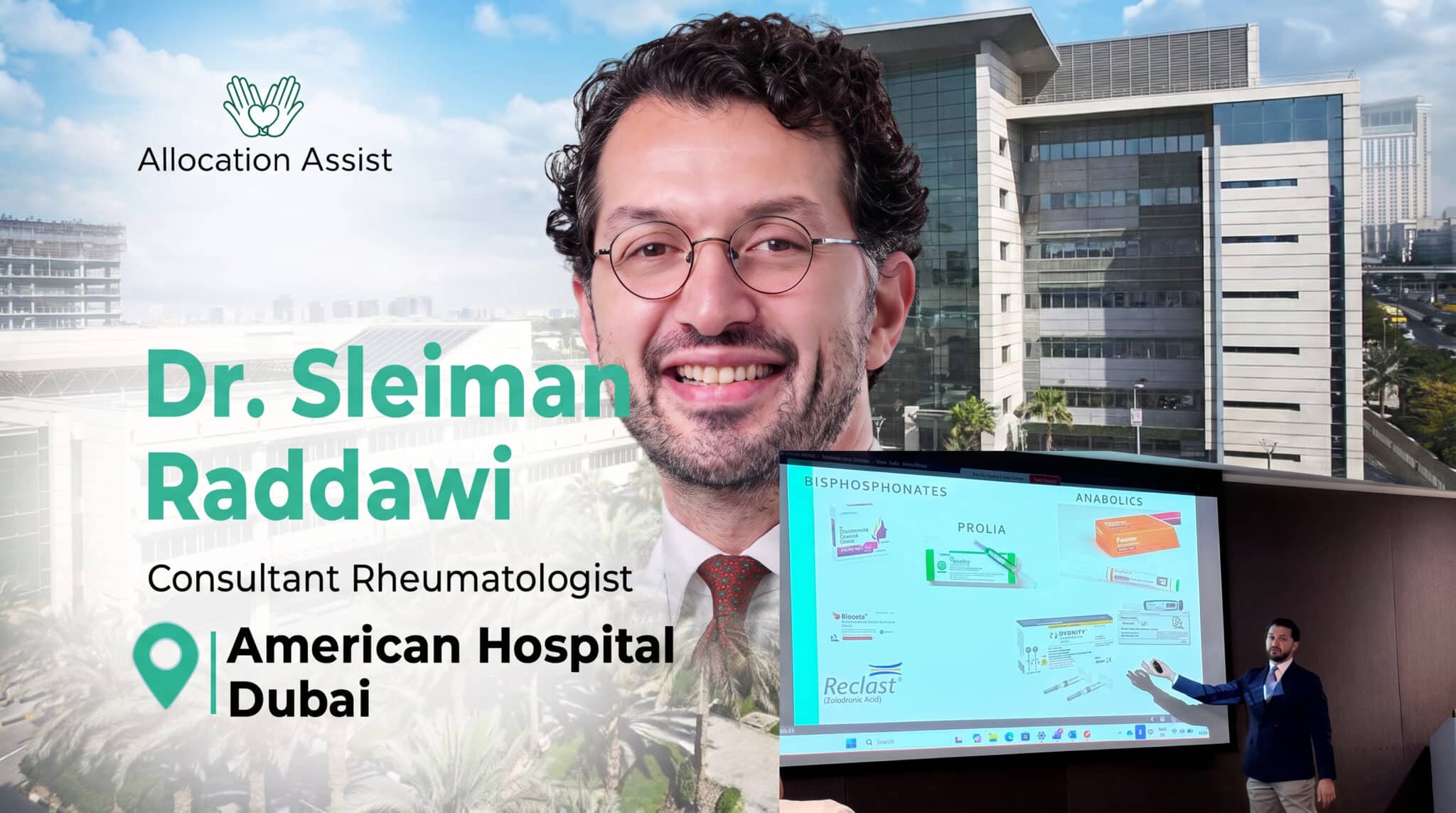
Some Doctors make an impact one patient at a time. Others find opportunities to improve the way care is delivered for every patient who comes after. Dr. Sleiman Raddawi is doing both, and for patients that means dedicated care from leading experts.
Key Takeaways
- Dr. Sleiman Raddawi is an American Board-Certified Consultant Rheumatologist at American Hospital Dubai.
- Just a few months into his new role, he is already helping to standardise osteoporosis care and create a more comprehensive, evidence-based pathway for patients.
- The long-term goal is to work towards establishing an Osteoporosis Center of Excellence at American Hospital Dubai.
- Osteoporosis can progress quietly, often without obvious signs until a fracture changes everything, and the goal is a more structured approach that identifies and manages it earlier.
- Allocation Assist Middle East is proud to have represented Dr. Sleiman Raddawi in the UAE.
How Can One Doctor Improve Care for Every Patient?
Dr. Sleiman Raddawi is an American Board-Certified Consultant Rheumatologist at American Hospital Dubai. Just a few months into his new role, he is already helping to standardise osteoporosis care and create a more comprehensive, evidence-based pathway for patients.
What Does an Osteoporosis Center of Excellence Mean?
This is more than a new protocol. The long-term goal is to work towards establishing an Osteoporosis Center of Excellence at American Hospital Dubai, bringing greater structure and consistency to how osteoporosis is identified, assessed, treated and managed over time.
Why Does Earlier Osteoporosis Care Matter for Patients?
Osteoporosis can progress quietly, often without obvious signs until a fracture changes everything. The goal is to change that story, with a more structured approach that helps identify and manage the condition earlier, giving patients the chance for better care before they ever reach that point.
Conclusion
Dr. Sleiman Raddawi’s work shows how one Doctor can make an impact both one patient at a time and for every patient who comes after. An American Board-Certified Consultant Rheumatologist at American Hospital Dubai, he is, just a few months into his role, already helping to standardise osteoporosis care and build a more comprehensive, evidence-based pathway, with the long-term goal of establishing an Osteoporosis Center of Excellence. Because osteoporosis can progress quietly until a fracture changes everything, that more structured approach gives patients the chance for better care before they ever reach that point.
Thinking About a Move to the Gulf?
Allocation Assist Middle East is proud to have represented Dr. Sleiman Raddawi in the UAE and to see the impact his expertise is already making. If you’re a Western-trained Doctor thinking about moving to the UAE, Saudi Arabia, or Qatar, your next experience can become part of something much bigger. 11+ years of experience. A network of 95+ hospitals. Let us find the right opportunity for you.
Frequently Asked Questions
What is osteoporosis?
Osteoporosis is a condition in which the bones become weak and brittle, so they break more easily than healthy bone. It develops when the body loses old bone faster than it makes new bone, which lowers bone density over time.
Why is osteoporosis called a silent disease?
There are often no symptoms in the early stages of bone loss, so many people do not know they have osteoporosis until a bone breaks. This is why it is sometimes described as silent, and why identifying it early matters.
Who is most at risk of osteoporosis?
The risk rises with age and is higher in women after menopause, in people with a family history of osteoporosis or hip fractures, and in those with a small body frame or low calcium intake. Smoking, heavy alcohol use, and some medications can also increase the risk.
How is osteoporosis diagnosed?
Osteoporosis is usually diagnosed with a bone density scan, most often a DEXA scan, which is a quick, painless test that measures bone mineral density, commonly at the hip and spine. The result helps show whether bone density is normal, low, or in the osteoporosis range.
Can osteoporosis be prevented or treated?
Steps such as enough calcium and vitamin D, weight-bearing and strength exercise, and avoiding smoking and excess alcohol help protect bone. When treatment is needed, medications that slow bone loss or help build bone are used, guided by a specialist.