Dubai’s emergency healthcare system provides you with world-class medical services through a thorough network of facilities. You’ll find response times of 4-8 minutes, backed by GPS-optimized dispatch and advanced ambulance capabilities. The system adheres to strict DHA guidelines, maintains HACCP certification, and requires mandatory emergency care certifications for all staff. Strategic developments through 2025 include 107 new emergency bays and expanded infrastructure, essential knowledge for accessing Dubai’s premier emergency services.
Current Emergency Healthcare Standards in Dubai
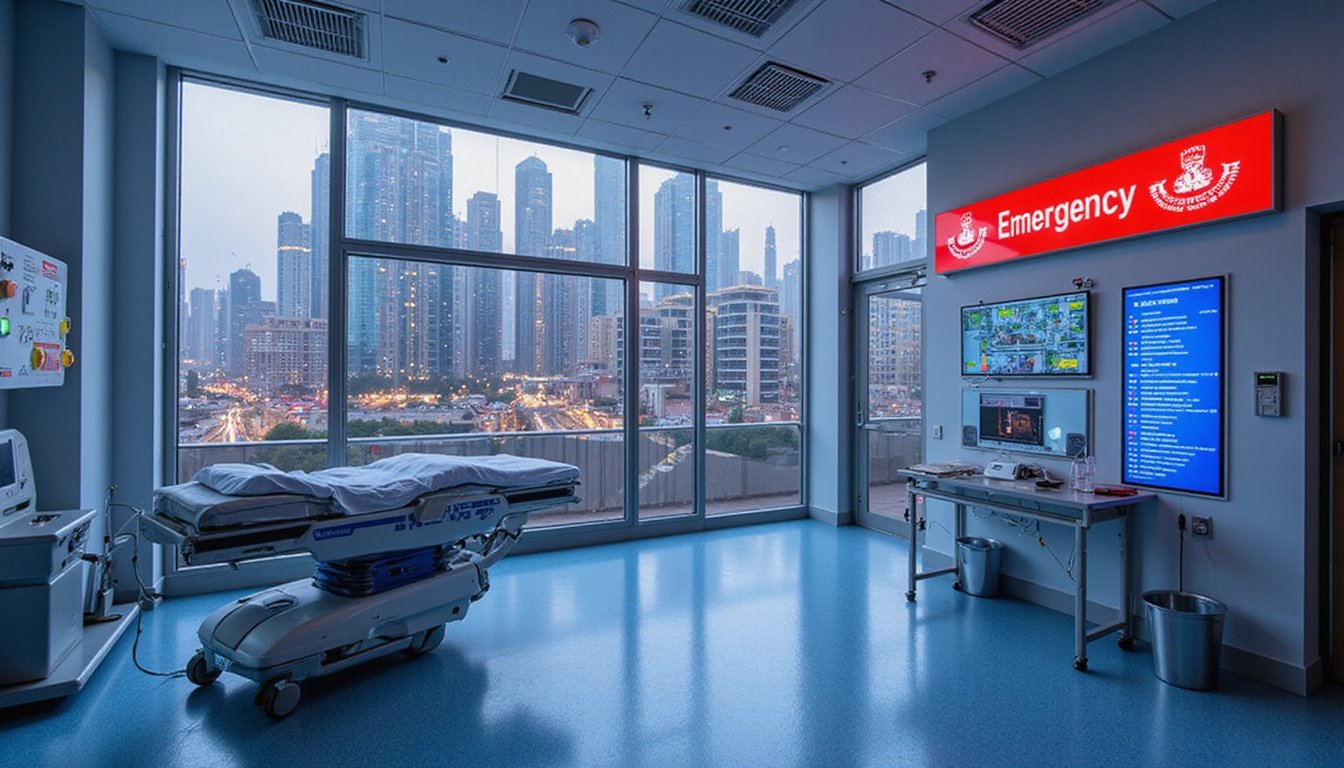
While Dubai’s emergency healthcare infrastructure continues to evolve, Law No. (5) of 2025 establishes thorough standards across the emirate’s medical facilities. Dubai’s world-class facilities attract eminent doctors from around the globe, strengthening emergency care capabilities. You’ll find standardized health protocols governing everything from triage procedures to resource allocation, guaranteeing consistent emergency response quality. The law requires HACCP certification for all medical facility food services to ensure patient safety. What patients look for in Dubai clinics includes personalized care and innovative treatment options. Many are drawn to the advanced technology and highly skilled professionals available in the emirate.
DHA-licensed facilities must maintain specific professional qualifications for emergency unit staff, including mandatory certifications in trauma care and life-support logistics. Facilities are now being restructured into Emergency Departments and Urgent Care Centres to better serve patient needs. You’re assured access to healthcare providers who’ve completed rigorous training in patient assessment and crisis management coordination.
The system’s integrated digital tools enhance your care through pre-arrival health screenings and entry-point diagnostics. Real-time surveillance dashboards enable targeted interventions, while strict reporting requirements guarantee communicable diseases are tracked within 24 hours. These standards align with global health benchmarks, positioning Dubai’s emergency healthcare services at the forefront of medical excellence.
Strategic Development of Emergency Services
Building on established emergency care requirements, strategic development initiatives now shape Dubai’s evolving healthcare landscape through 2025. You’ll see extensive emergency response enhancements focusing on specialized units and expanded facilities to meet growing demands. The expansion emphasizes public-private partnerships to accelerate emergency care development across the emirate. Dubai Health’s commitment to providing innovative healthcare solutions stems from visionary leadership that prioritizes patient-centered care. which groups benefit most Dubai’s healthcare plays a crucial role in ensuring equitable access to essential medical services. This initiative specifically targets vulnerable populations, enhancing their overall health outcomes through tailored programs.
Key service enhancements include:
- Implementation of mandatory Incident Command training protocols across healthcare facilities
- Development of 107 additional emergency department bays with prioritized acute care access
- Integration of AI-driven resource management tools for optimized crisis allocation
You can expect significant infrastructure expansion with three new hospitals and 33 primary healthcare centers targeting underserved areas. The strategic focus addresses critical bed capacity gaps, particularly in cardiology, orthopedics, and psychiatric care. Dubai’s commitment to innovation manifests through 37 high-priority AI projects, ensuring future-ready emergency healthcare delivery.
Performance Metrics and Quality Assurance

Rigorous performance metrics and quality assurance protocols now drive Dubai’s emergency healthcare excellence through standardized KPIs and real-time monitoring systems. You’ll find biannual reporting requirements guarantee continuous performance evaluation across all DHA-licensed facilities, with designated Quality Representatives overseeing data accuracy. The innovative Zero Harm Initiative has established comprehensive safety protocols to minimize preventable medical errors.
The system’s effectiveness is evident in world-leading response times of 4-8 minutes, achieved through GPS-optimized dispatch and real-time monitoring. You’ll see this performance improvement reflected in advanced ambulance capabilities, featuring portable ventilators and seamless hospital integration. Multilingual call operators ensure effective communication with Dubai’s diverse population during emergencies. Quality assurance workflows include internal audits and thorough staff training programs to maintain service standards. Expat opinions on Dubai healthcare quality often highlight the accessibility and efficiency of medical services in the city. Many residents appreciate the availability of specialized treatments and the state-of-the-art facilities. When considering leading healthcare clinics in Dubai, it’s essential to evaluate the range of services offered, including specialist consultations and diagnostic tests.
To track progress, DHA implements system-level quality monitoring while guaranteeing cross-departmental collaboration for detailed assessments aligned with Dubai’s Health Sector Strategy 2026.
Future-Ready Emergency Healthcare Infrastructure
Dubai’s forward-looking emergency healthcare infrastructure integrates extensive preparedness systems with advanced technological capabilities to secure readiness for future healthcare demands. Through smart technologies and community partnerships, you’ll find a robust network designed to handle diverse medical emergencies. The implementation of smart IoT systems has significantly improved operational efficiency and patient monitoring in emergency departments.
Dubai’s visionary healthcare system blends cutting-edge technology with strategic preparedness, creating a resilient network ready for tomorrow’s medical challenges.
Key infrastructure developments include:
- Three specialized hospitals by 2033, featuring artificial heart transplantation and advanced pancreatic treatments
- 33 primary healthcare centers strategically placed in Al Yalayis, Lehbab, and other underserved areas
- Thorough digital integration with EHRs, CPOE, and telehealth platforms
The infrastructure emphasizes real-time response capabilities through the Incident Command System and field hospital deployment protocols. You’ll benefit from enhanced emergency preparedness, supported by continuous system improvements and post-incident analysis to guarantee peak healthcare delivery during crises.
Ready to Take Your Career to Dubai?
Building a medical career in the UAE raises a lot of questions, and it helps to have someone who knows the answers. At Allocation Assist, we help doctors at every point of the process, from reading up in Working as a Doctor in the UAE: A Guide to practical support with our DHA license consultancy. If you would like to talk it through, you can book a free consultation.
Frequently Asked Questions
What Are the Estimated Wait Times for Non-Emergency Cases at Dubai Hospitals?
You’ll typically wait around 49 minutes at urgent care facilities, following patient triage protocols. This includes approximately 1.2 minutes for nurse assessment and 1.3 minutes for physician consultation. Hospital capacity management systems aim to keep your total visit under 240 minutes (4 hours) per official guidelines. For overnight care at facilities like Al Qusais Clinic, you can expect streamlined wait times due to AI-powered scheduling and reduced patient volumes.
Are Translation Services Available for Non-Arabic and Non-English Speaking Patients?
Yes, you’ll have access to extensive language assistance through 24/7 translation services. You can receive patient support in multiple languages via phone, video, or in-person interpretation. The service guarantees interpreter connection within 15 minutes for urgent medical cases. All interpreters are certified by NAATI, ISO, and Dubai Health Authority, ensuring accurate medical communication. You’ll also get help with document translation, including consent forms and discharge instructions.
Which Insurance Providers Cover Emergency Care Services in Dubai?
You’ll find thorough insurance coverage for emergency services through several providers in Dubai. Global insurers like Cigna Global, Bupa Global, and William Russell offer extensive emergency care networks. For local coverage, you can rely on GIG Gulf, Daman, or Emirates Insurance Company. All DHA-compliant plans must include emergency care under the Essential Benefits Plan, with a minimum coverage of AED 150,000. Government-affiliated programs like DubaiCare Network also guarantee emergency protection.
How Can Patients Access Their Emergency Medical Records After Treatment?
You can access your emergency medical records through the NABIDH platform’s secure patient portal using your registered credentials. To guarantee patient privacy, you’ll need to complete multifactor authentication and may require explicit consent verification. For record retrieval, contact your healthcare provider or DHA services to set up portal access. You can then view your complete medical history, including emergency treatments, prescriptions, and diagnostic results through the integrated system.
What Are the Transportation Options for Reaching Emergency Departments Across Dubai?
You can access emergency departments through multiple transportation options in Dubai. For urgent medical needs, you’ll want to call the ambulance services, which offer advanced life support and rapid response across the city. If your condition isn’t life-threatening, you can use public transport options including Dubai Metro and RTA buses, which connect to major hospitals. Ride-hailing services and private vehicles are also viable options for less critical situations.