To secure a surgeon position in Dubai, you’ll need to verify your medical credentials with the UAE Ministry of Education and maintain a valid home country license. Start by completing the DHA licensing process through Dataflow verification and specialty-specific Prometric exams. Focus your portfolio on high-demand specialties like cardiothoracic or neurosurgery while building professional connections through events like WHX Dubai. Understanding Dubai’s healthcare landscape and complete requirements will maximize your success potential. Additionally, knowing how much surgeons earn in Dubai can help you negotiate your salary effectively. The compensation packages often vary based on experience and specialty, making it essential to research and understand market rates.
Evaluating Your Medical Credentials and Experience

Before pursuing surgical opportunities in Dubai, you’ll need to thoroughly evaluate your medical credentials and ascertain they align with the UAE’s stringent requirements. Start by confirming your primary medical degree is recognized by the UAE Ministry of Education and meets the five-year continuous medical education requirement. Your valid medical license from your home country must be current and in good standing to be considered for surgical positions.
Your multi-country credential evaluation must include verification of your supervised internship with rotations in major specialties. For surgical positions, you’ll need to demonstrate 3-7 years of continuous specialty practice and maintain a detailed surgical logbook. The skills assessment approach involves authenticating all certificates, transcripts, and specialty certifications in English or Arabic. Having a German Facharzt qualification can expedite your licensing process as it’s recognized as a top-tier credential. If you’re seeking a consultant role, you’ll also need to provide evidence of peer-reviewed publications and specialty-specific training programs post-certification. The Dataflow verification process will thoroughly validate your credentials through the DHA’s Primary Source Verification system.
Obtaining Dubai Health Authority (DHA) Licensing
Once you’ve validated your medical credentials, securing a Dubai Health Authority (DHA) license becomes your next critical milestone. You’ll need to prepare an exhaustive documentation package, including your valid medical degree, transcripts, and a Good Standing Certificate that’s less than six months old. Each professional must ensure their documents are in English to meet authority requirements.
The licensing process involves several key steps. You’ll initiate primary source verification through Dataflow, which typically takes 6-8 weeks to complete. During this time, you’ll face potential primary source verification challenges if your documents require additional verification. Once cleared, you’ll proceed to the exam application procedures, which include taking the DHA Prometric exam or oral assessment specific to your surgical specialty. After passing the assessment, your license activation will allow you to practice in Dubai medical facilities, subject to annual renewal requirements and CPD credits. It’s important to note that surgeons can only practice in facilities with a valid DHA Facility License that aligns with their specialty and scope of practice. For international medical professionals from countries with unrecognized training programs, the entire process may take 9 to 12 months to complete.
Crafting a Specialized Surgical Portfolio
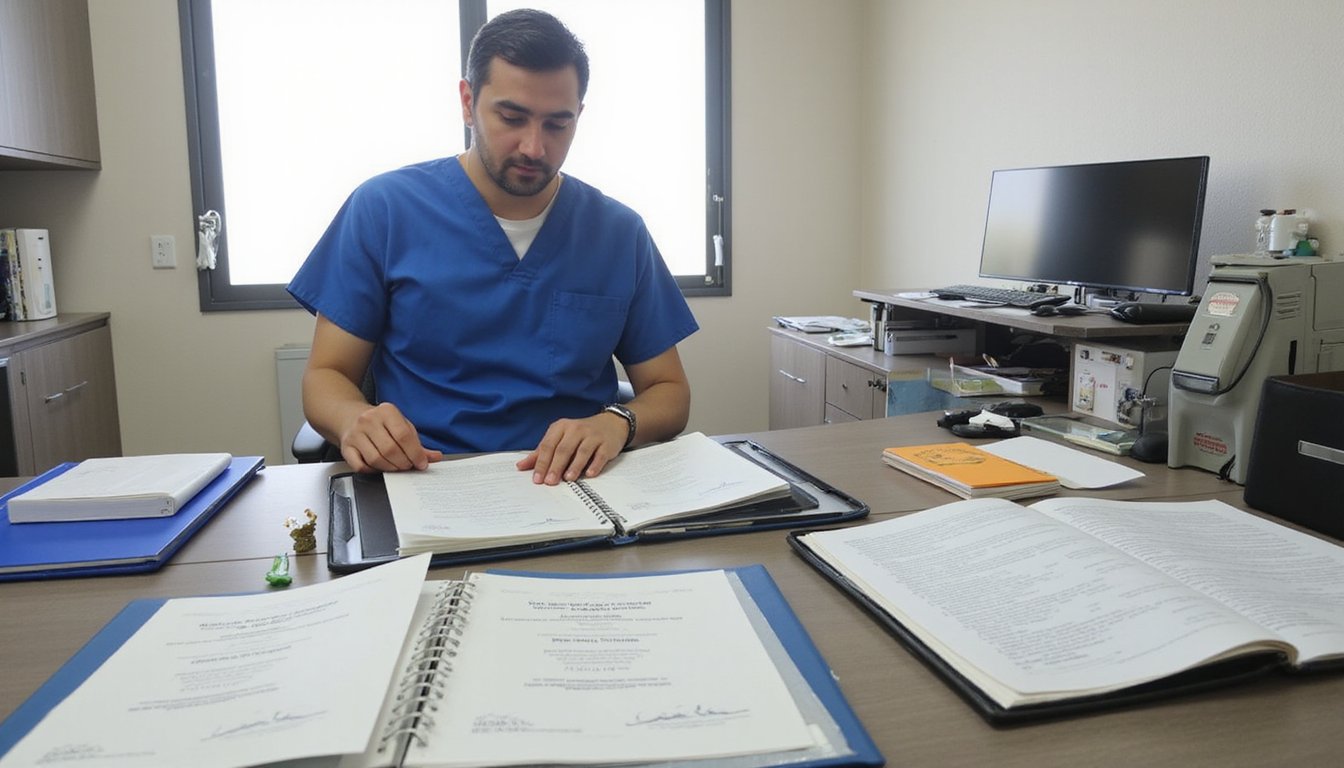
While pursuing your DHA license, you’ll need to develop an extensive surgical portfolio that showcases your expertise and capabilities. Begin by compiling your verified medical credentials, including your MBBS degree, board certifications, and specialized training documentation that reinforces your academic reputation.
Your portfolio should feature a thorough logbook of surgical procedures, highlighting your experience in trauma, hernia repair, and complex interventions. Include evidence of interdisciplinary collaboration through multidisciplinary rotations and team leadership roles. A comprehensive collection of peer-reviewed publications since medical school can significantly strengthen your application. Creating a personalized learning path aligned with your career goals can demonstrate your commitment to professional growth. Document your ongoing professional development through CME certifications, workshop participation, and research contributions.
Don’t forget to showcase your teaching experience, quality improvement initiatives, and any published works. Ensure all documents are authenticated and translated as required, maintaining a clear structure that emphasizes your surgical competencies and commitment to excellence.
Targeting High-Demand Surgical Specialties
As Dubai’s healthcare sector continues to expand, understanding which surgical specialties are in highest demand can strategically position you for success. Focus your job search on cardiothoracic surgery, where there’s a projected surge in demand through 2025, particularly for interventional procedures. You’ll also find significant opportunities in plastic surgery, neurosurgery, and orthopedics, where hospital employment contracts often include visa sponsorship requirements. Leading facilities prioritize surgeons with board certification from internationally recognized bodies, especially for plastic surgery specializations. The Dubai Health System extends across four major hospitals, offering diverse surgical opportunities.
Target positions in tertiary care facilities that are investing in advanced technologies and expanding their specialty departments. The region’s aging populations have led to increased cancer cases, creating substantial opportunities in surgical oncology. If you’re board-certified with fellowship training in areas like stroke neurology, joint replacement, or interventional cardiology, you’ll be particularly competitive. Dubai’s private healthcare providers are actively recruiting surgeons who can demonstrate expertise in specific procedures rather than generalists, especially those with experience in minimally invasive techniques. Working as a surgeon in Dubai’s healthcare presents unique challenges and rewards, especially given the city’s fast-paced medical advancements. Surgeons with a strong background in innovative techniques are highly sought after, as they can significantly enhance patient outcomes.
Leveraging Professional Medical Networks

You’ll enhance your surgical career prospects in Dubai by actively participating in prominent medical society events like WHX Dubai and iConference Middle East, where you can connect directly with hospital leaders and department heads. Consider joining MedGlobal Connect events where expert-led conferences provide invaluable networking with global healthcare leaders. The Elegance Conference 2025 at Conrad Hotel offers a prime opportunity to meet world-class experts in specialized medical fields. Your consistent presence at these professional gatherings will help establish your reputation within Dubai’s healthcare community while providing access to exclusive job opportunities not publicly advertised. Maintaining an active LinkedIn healthcare network enables you to follow up with contacts made at these events and stay visible to potential employers through regular professional engagement. Local health and wellness networking events, which typically cost $49.00 to $99.00, provide additional opportunities to build professional relationships within Dubai’s medical community.
Join Medical Society Events
Medical society events serve as essential gateways for surgeons seeking employment opportunities in Dubai’s healthcare sector. You’ll find extensive networking platforms through annual and quarterly conferences that connect you directly with hospital administrators and department heads. These events feature hands-on workshops, career development sessions, and dedicated recruiter meet-ups tailored to your professional goals. The upcoming 6th World Congress in December 2025 presents an exceptional opportunity to explore breakthroughs in personalized care and surgical innovations. The Clinical Pharmacy conference on October 24th offers valuable insights into personalized medicine approaches.
Take advantage of in-person networking lounges and meet-the-expert sessions to build meaningful connections with senior medical faculty. You’ll gain access to on-site interviews, live CV evaluations, and up-to-date job listings specific to surgical positions. Additionally, these events offer CME-accredited programs that enhance your eligibility for advanced hospital roles while ensuring compliance with Dubai Health Authority requirements. Don’t miss opportunities like Health 2.0 Conference and MEA MedTech Summit for maximum exposure to potential employers.
Connect Through LinkedIn Healthcare
While traditional job searching methods remain valuable, LinkedIn has emerged as a pivotal platform for surgeons seeking opportunities in Dubai’s healthcare sector. With 89% of healthcare companies actively recruiting through LinkedIn, optimizing your LinkedIn profile is essential for visibility among Dubai’s medical employers.
Start by engaging with healthcare-specific content, as it receives 20% higher engagement than other industries. Join medical professional groups, where member engagement has increased by 45% in the past year. Focus on sharing and commenting on thought leadership content, which healthcare executives are 47% more likely to engage with. When leveraging LinkedIn insights, prioritize document posts, which generate 278% more engagement than videos. Connect with Dubai’s healthcare professionals during peak platform usage times, typically averaging 15 minutes daily, to maximize your networking potential.
Mastering the Application Process
Landing a surgeon position in Dubai requires mastering an extensive application process that demands meticulous attention to detail and strict adherence to regulatory requirements. Taking a proactive application approach while maintaining diligent document compilation will substantially improve your chances of success.
- Complete your self-assessment through the DHA website and verify all credentials through the DataFlow system’s Primary Source Verification (PSV)
- Register on the Sheryan Portal to submit your DHA medical license application with supporting documentation
- Schedule and pass the required Prometric computer-based test, unless you’re exempt based on your country of qualification
- Submit your application materials through recognized job boards and institutional portals, highlighting relevant specializations, certifications, and multicultural competencies
Remember to maintain precise documentation and stay current with regulatory updates throughout the process.
Preparing for Clinical Assessments
You’ll need to thoroughly demonstrate your surgical competency through clinical simulations that test your procedural skills, decision-making abilities, and crisis management capabilities. Your documentation must include an extensive surgical logbook detailing your procedures, patient outcomes, and clinical experiences, along with verification from supervising consultants. To maximize your success in the clinical assessments, you should maintain detailed records of your continuing medical education activities, specialty-specific training certifications, and simulation center completion certificates.
Clinical Simulation Requirements
Successful preparation for surgical positions in Dubai consistently requires rigorous clinical simulation assessments. You’ll need to demonstrate proficiency in high-fidelity simulator environments that mirror real hospital settings. These multidisciplinary training programs evaluate your technical and non-technical skills through scenario-based exercises and standardized patient interactions.
- Master core competencies using hospital-grade equipment in dedicated labs for specific procedures, emergency responses, and surgical specialties
- Participate in extensive assessments covering the complete patient journey, from admission through post-operative care
- Demonstrate proficiency in team-based scenarios, showing effective communication and decision-making skills
- Complete required Advanced Life Support (ALS) and Basic Life Support (BLS) certifications while meeting international accreditation standards
Your performance will be evaluated through audiovisual monitoring, structured clinical assessments, and detailed procedural checklists.
Documentation Best Practices
To secure a surgical position in Dubai, proper documentation serves as the cornerstone of your clinical assessment preparation. You’ll need to authenticate your original medical degrees and specialty certificates through the Ministry of Education and UAE Embassy. For non-English documents, you must provide certified translations.
Ensure your surgical logbook is exhaustive and validated, detailing all procedures you’ve performed. Your clinical experience letters should specify your roles, responsibilities, and expertise within surgical settings. These letters must be signed by HR or medical directors and demonstrate continuous experience without unexplained gaps.
Don’t forget to maintain current documentation of your Good Standing Certificate, which is valid for only six months. Complete Primary Source Verification through DataFlow for your qualifications, licenses, and certificates to streamline your application process.
Understanding Compensation and Benefits
Dubai’s surgeon compensation packages rank among the most competitive in the global healthcare market, with tax-free salaries ranging from AED 300,000 to over AED 2.4 million annually. When negotiating compensation, you’ll need to understand the full scope of benefits and incentives available.
- Your base salary will vary greatly based on specialty, experience, and qualifications, with senior consultants earning up to AED 160,000 monthly
- Standard benefits include broad health insurance, 30+ days annual leave, housing allowance, and end-of-service gratuity
- Additional incentives often feature signing bonuses, relocation allowances, and CME support
- Your earning potential increases substantially with subspecialty expertise, especially in neurosurgery, cardiothoracic, and orthopedics, while US/UK board certifications command premium compensation
Navigating Dubai’s Healthcare Culture
As a surgeon in Dubai, you’ll need to adapt to a multicultural healthcare environment where English serves as the primary language while respecting diverse cultural sensitivities and patient expectations. You’ll find that private facilities maintain rigorous international accreditation standards, particularly JCI compliance, which demands consistent clinical excellence and thorough documentation. You must also understand that private healthcare patients in Dubai expect premium service standards, including minimal wait times, private rooms, and access to cutting-edge medical technology.
Cultural Awareness With Patients
Working effectively as a surgeon in Dubai requires deep understanding of the emirate’s unique healthcare culture, where Islamic beliefs and diverse cultural traditions profoundly influence patient care. Your success depends on developing cultural sensitivity and trust building with a remarkably diverse patient population representing over 200 nationalities.
To navigate this multicultural healthcare environment effectively:
- Demonstrate respect for religious practices and cultural values, particularly regarding gender preferences, modesty, and privacy during consultations
- Recognize that many patients may combine traditional remedies with modern medical treatments, requiring tactful discussion of treatment plans
- Develop strategies to overcome language barriers, using professional interpreters when needed to facilitate clear communication
- Approach mental health concerns with cultural awareness, understanding that patients often express psychological distress through physical symptoms
Clinical Excellence Standards
Medical professionals seeking surgical positions in Dubai must navigate a rigorous framework of clinical excellence standards that encompasses multiple accreditation bodies, regulatory requirements, and quality benchmarks.
You’ll need to demonstrate compliance with international accreditation standards, particularly from organizations like JCI, Accreditation Canada, and ACHS. Dubai’s healthcare facilities maintain strict regulatory compliance through periodic external audits and continuous improvement initiatives. As a surgeon, you’ll be expected to participate in thorough quality measures, including infection control protocols and evidence-based practices.
You must also maintain detailed documentation of your surgical procedures through officially stamped logbooks and contribute to your facility’s quality assurance cycles. If you’re practicing in a Center of Excellence, you’ll need to meet additional benchmarks for clinical quality and participate in multidisciplinary care teams to guarantee superior patient outcomes.
Private Healthcare Expectations
The private healthcare sector in Dubai presents a sophisticated ecosystem that you’ll need to navigate effectively as a surgeon. As you consider opportunities in Dubai’s premium medical facilities, understand that expected quality standards are exceptionally high, driven by international accreditation requirements and stringent DHA regulations.
Key aspects you’ll encounter in Dubai’s private healthcare environment:
- You’ll work with patients who have diverse healthcare insurance coverage plans, including mandatory expatriate insurance and international policies
- You’ll operate in state-of-the-art facilities catering to both local residents and medical tourists
- You’ll need to adapt to a system emphasizing shorter wait times and immediate specialist access
- You’ll engage with a multicultural patient base expecting premium services and English-speaking medical staff
These expectations align with Dubai’s position as a leading global healthcare destination, requiring consistently high performance standards from medical professionals. A surgeon’s role in Dubai healthcare is critical for maintaining these high standards. The city attracts top talent from around the world, enhancing the quality of care available to patients.
Building Long-Term Career Success
Successfully building a long-term surgical career in Dubai requires strategic planning across multiple professional dimensions. You’ll need to focus on professional development opportunities through advanced certifications and Western training programs, which can increase your earning potential by 15-25%. Continuous education strategies, including regular CME participation and research publications, will strengthen your position for leadership roles.
Maximize your career trajectory by joining professional medical associations and building a strong digital presence on physician networks. You’ll want to target employment at prestigious institutions like Rashid Hospital or American Hospital Dubai, where you’ll find advanced technology and research opportunities. Consider whether private sector positions, offering higher compensation up to AED 120,000 monthly, or public sector roles with enhanced stability better align with your career goals.
Looking for a Medical Role in Dubai?
Finding the right role in the UAE is far easier with a team that knows the market well. At Allocation Assist, we help doctors at every point of the process, from reading up in Doctor Jobs in Dubai to practical support with our DHA license consultancy. If you would like to talk it through, you can book a free consultation.
Frequently Asked Questions
What Is the Typical Work-Life Balance for Surgeons in Dubai?
As a surgeon in Dubai, you’ll face demanding work hours that can profoundly impact your lifestyle adjustments. You’ll typically work beyond 40 hours weekly, with frequent on-call duties and night shifts, especially in public hospitals. While private facilities offer more structured schedules, expect to balance long operating hours with personal time. You’ll benefit from Dubai’s high living standards and tax-free income, though you’ll need to actively manage work-life boundaries to prevent burnout.
Are Family Sponsorship Visas Available for Surgeons Working in Dubai?
Yes, as a surgeon in Dubai, you’ll have full family sponsorship opportunities for your spouse and children. Your profession meets the UAE’s sponsorship criteria, and you can initiate the visa application process once you’ve secured your employment contract and residence visa. You’ll need to submit your marriage certificate, passport copies, salary certificate, and medical insurance documentation. Your sponsored family members’ visas will typically align with your employment visa duration.
How Long Does Medical Equipment Clearance Typically Take for Personal Surgical Tools?
You can expect medical equipment clearance processing time to take 2-6 weeks for your personal surgical tools in Dubai. The timeline depends on DHA approval and tool import regulations compliance. If your instruments require additional technical evaluation or are classified as high-risk, clearance could extend up to 8 weeks. To avoid delays, you’ll need to submit complete documentation, including sterilization protocols, MOHAP registration certificates, and customs declaration forms.
Which Residential Areas Do Most Medical Professionals Prefer in Dubai?
You’ll find most medical professionals favoring popular residential communities near healthcare facilities, with Dubai Healthcare City vicinity and Oud Metha being top choices. JLT and Al Barsha are also preferred for their proximity to major hospitals. While senior consultants often choose Dubai Marina or Downtown Dubai for luxury living, many healthcare staff opt for cost-effective areas like Al Qusais or Dubai Silicon Oasis, which offer a balance of affordability and reasonable commute times.
Can Surgeons Maintain Private Practices Alongside Hospital Employment in Dubai?
Yes, you can maintain dual income streams in Dubai, but with strict regulatory compliance. You’ll need your primary hospital employer’s approval and must obtain separate licenses for each facility where you practice. Practice management considerations include establishing a free zone consultancy company (FZCO) or pursuing the community-based doctor model, which allows work at 2-3 additional clinics. Remember, all arrangements must follow UAE employment laws and licensing requirements.