Expat communities in Dubai form along lines of nationality, income, and institutional infrastructure, not randomly. You’ll find Indians concentrated in Bur Dubai and Discovery Gardens, British expats in Arabian Ranches, and labor workers housed in Al Quoz camps. Schools offering 17 distinct curricula, religious institutions, and professional networks anchor these clusters, reinforcing cultural continuity for over 200 nationalities. Understanding how these patterns intersect with sponsorship reforms and Golden Visas reveals why Dubai’s expat landscape is shifting from transient to permanent. Many newcomers often wonder how long it takes to feel settled in Dubai. It typically requires several months to fully adjust to the vibrant lifestyle and diverse cultural dynamics.
Inside Dubai’s 92% Expat Population: Scale, Nationalities, and Growth
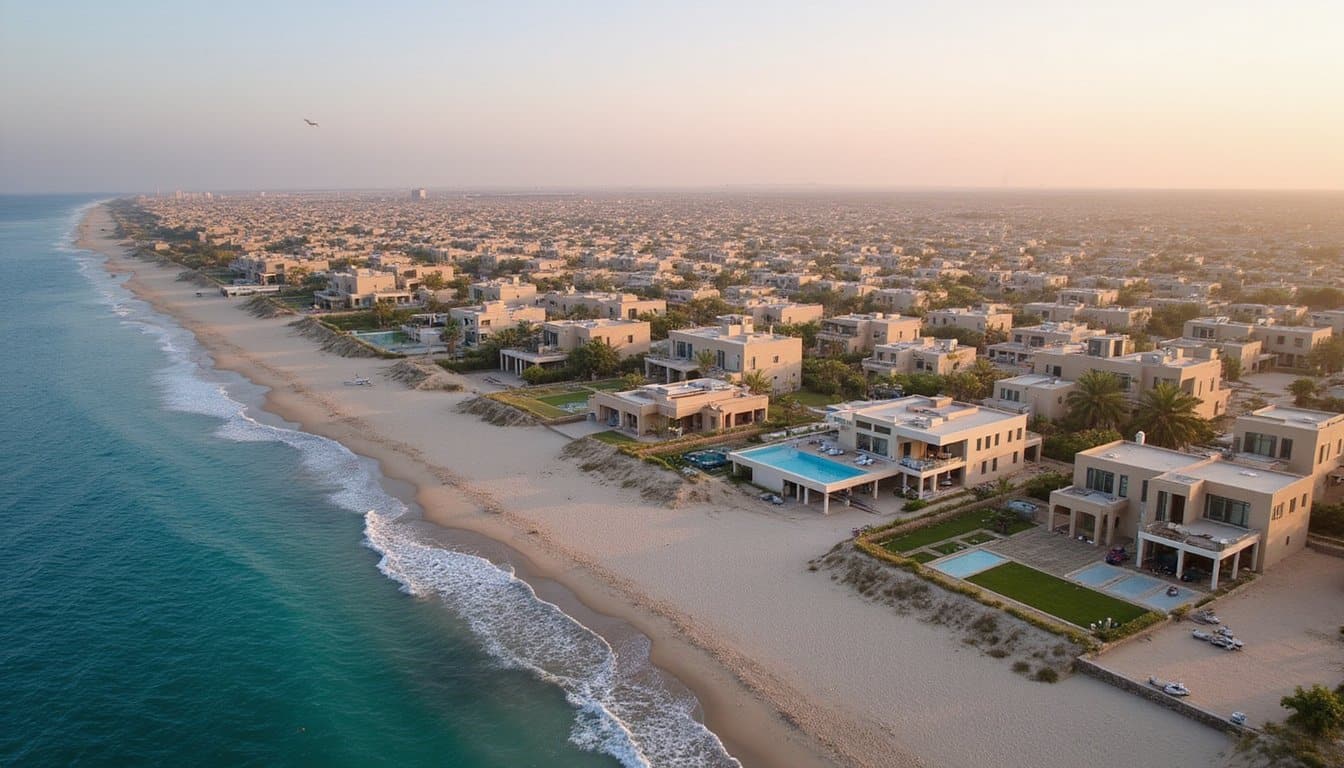
You’ll find Indians represent 51% of expatriates, followed by Pakistanis at 17% and Bangladeshis at 9%. Filipinos, Iranians, and Egyptians round out the major groups. The international professionals in the Dubai community skews 75% male, with a dominant 25 to 54 age bracket averaging 32 years. With Dubai’s population now estimated at over 3.1 million in 2026, the sheer scale of this expatriate presence continues to accelerate. The city has doubled in population in less than 15 years, reflecting a rapid transformation that shows no signs of slowing. Population projections from the Dubai Data and Statistics Center indicate the city is on track to reach over 4 million by 2025, underscoring just how rapidly the demand for services and professionals is expanding. For doctors building physician expat networks in the UAE, these demographics shape the patient populations you’ll serve and the professional circles you’ll navigate daily.
Why Dubai Attracts Expat Communities From 200+ Countries
You’re drawn to Dubai largely because it imposes no personal income tax on salaries, no capital gains tax, and no inheritance tax, a fiscal framework that lets you retain substantially more of your earnings than in most Western economies. Beyond the financial incentive, you’ll find a city where over 200 nationalities coexist, creating a multicultural ecosystem that supports diverse cuisines, cultural institutions, international schools, and professional networks tailored to nearly every background. This combination of economic advantage and lifestyle diversity explains why Dubai consistently ranks among the world’s top destinations for expatriate relocation across income levels and professions.
Tax-Free Economic Appeal
Because Dubai levies zero personal income tax on salaries, freelance earnings, and self-employment income, the emirate consistently draws professionals from over 200 countries seeking to maximize their net compensation. This fiscal framework directly shapes community life in Dubai, as higher disposable income funds social infrastructure, cultural organizations, and professional networks.
| Tax Category | Dubai Rate | UK/US Equivalent |
|---|---|---|
| Personal Income | 0% | 20 to 45% |
| Capital Gains | 0% | 10 to 28% |
| Rental Income | 0% | 20 to 45% |
| Dividends | 0% | 7.5 to 38.1% |
| Inheritance | 0% | Up to 40% |
Doctor expat communities dubai benefit particularly from retained earnings, funding healthcare professional communities dubai rely on for mentorship programs, specialty conferences, and cross-cultural clinical collaborations that sustain long-term professional integration. Many expat doctors find themselves drawn to Dubai not only for its vibrant lifestyle but also for the opportunities it presents. How long expat doctors stay in Dubai can vary widely depending on personal and professional circumstances.
Multicultural Lifestyle Opportunities
Few global cities match Dubai’s demographic composition, where 85% of the 3.1 million population holds expatriate status and over 200 nationalities coexist within a single metropolitan framework. You’ll find Indians comprising 51% of expats, Pakistanis 17%, Bangladeshis 9%, and Filipinos 3%, while British residents form the largest Western contingent.
This density of nationalities creates distinct cultural ecosystems you can navigate daily. Arabic serves as the official language, yet you’ll encounter English, Hindi, Urdu, Bengali, Tamil, Tagalog, Persian, and Chinese across neighborhoods and workplaces. Religious tolerance extends across Islam, Christianity, Hinduism, Sikhism, and Buddhism, reinforcing communal coexistence. You’re exposed to diverse cuisines, traditions, and social practices that mirror London’s cosmopolitan character. Dubai’s consistent safety rankings and geographic accessibility further cement its position as a multicultural hub.
Which Dubai Neighborhoods Have the Highest Expat Concentrations?
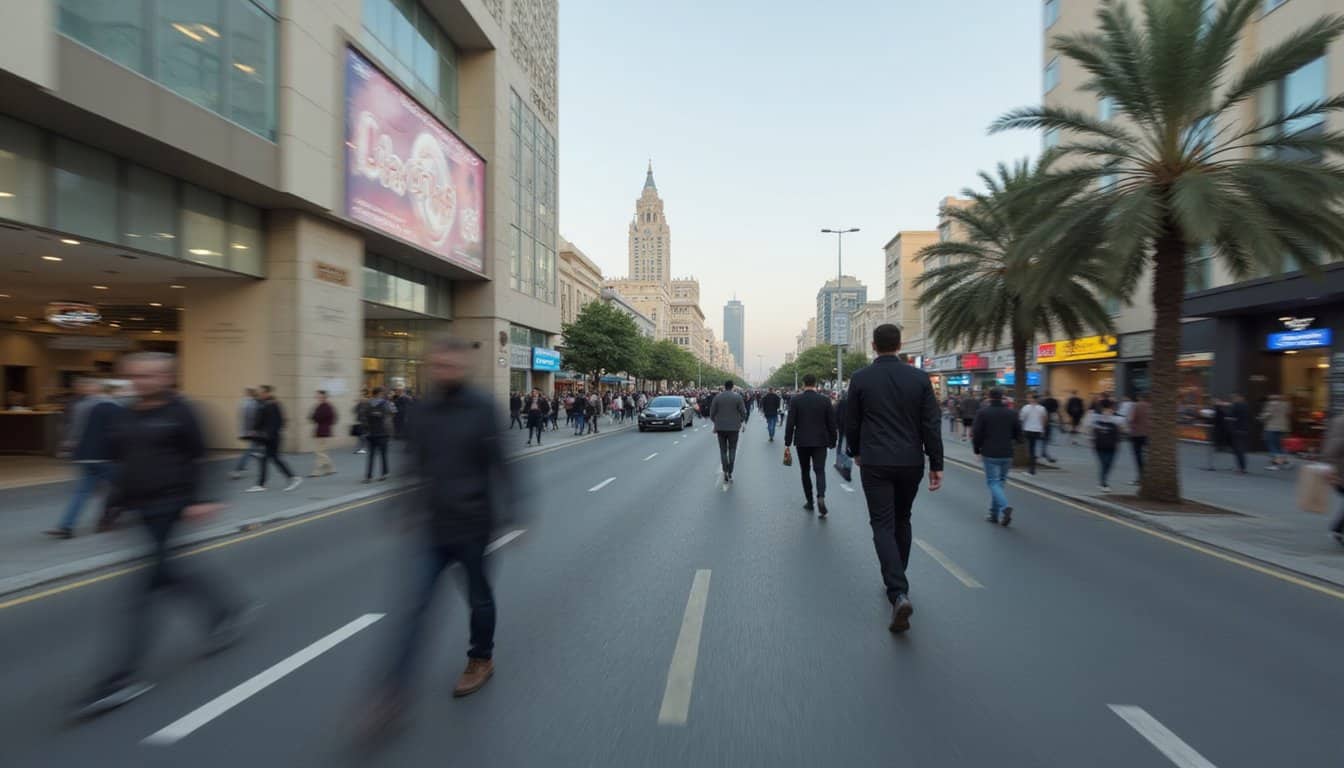
You’ll find Dubai’s expatriate population clustered most densely in two distinct neighborhood types: affluent residential enclaves and labor accommodation zones. Areas like Jumeirah First (8,685 HNWIs), Al Barsha (8,155), and Jumeirah (7,202) concentrate wealthy expat professionals and their families, while industrial districts such as Al Quoz and Sonapur house large-scale labor camps with some of the city’s highest per-square-kilometer expatriate densities. Understanding this geographic split reveals how Dubai’s urban landscape stratifies its foreign-born population along sharp socioeconomic lines.
Top Expat-Dense Sectors
When you examine where Dubai’s wealthiest expatriates actually cluster, the data reveals a clear geographic pattern. Jumeirah First leads with 8,685 high-net-worth individuals, followed by Al Barsha at 8,155 and Jumeirah at 7,202. These three areas alone concentrate 35% of Dubai’s 67,900 HNWIs.
You’ll notice each neighborhood serves a distinct expat demographic. Arabian Ranches, with 3,728 HNWIs, draws families seeking gated villa communities with golf clubs and schools. Al Barsha attracts wealthy households prioritizing education access, particularly near institutions like GEMS Dubai American Academy. Dubai Marina pulls affluent professionals toward its high-rise waterfront lifestyle.
This distribution isn’t random. You’re seeing self-sorting patterns where expatriates gravitate toward neighborhoods matching their household structure, professional identity, and lifestyle priorities, creating dense, economically homogeneous enclaves across Dubai’s urban landscape.
Labor Camp Neighborhoods
While Dubai’s glittering marina towers and gated villa compounds dominate discussions of expat neighborhoods, the city’s labor camps house the largest single concentration of foreign workers, yet receive the least analytical attention. You’ll find these settlements clustered in Al Quoz, Sonapur, and Jebel Ali, where construction and service-sector laborers form ethnographically distinct micro-communities organized by nationality, language, and employer.
Unlike the neighborhoods profiled above, Dubai Marina’s 80%-plus expat density or JVC’s 33 parks, labor camps lack recreational infrastructure, retail amenities, and transit connectivity. You won’t find golf courses or waterfront promenades here. Instead, shared dormitory-style housing accommodates workers whose labor literally builds the luxury compounds other expatriates inhabit. Understanding this demographic segment is essential if you’re mapping Dubai’s complete expat ecosystem rather than just its affluent, visible layers.
Why Expat Communities in Dubai Cluster by Nationality
Dubai’s expatriate communities don’t distribute evenly across the city, they cluster sharply along national lines, and the data makes this pattern unmistakable. Indians, comprising 28% of the UAE’s population, concentrate in Bur Dubai and Discovery Gardens. British expats gravitate toward Arabian Ranches, Jumeirah Golf Estates, and Marina. Arabs from Egypt, Syria, Jordan, and Lebanon anchor themselves near business and government corridors. The working duration of international doctors in Dubai varies significantly depending on their specialty and the demands of the local healthcare system. Many foreigners are drawn to the emirate due to its competitive salaries and advanced healthcare infrastructure.
You’ll find these patterns driven by three reinforcing factors: shared language accessibility, sector-specific employment, and cultural infrastructure. South Asians fill healthcare, trade, and construction roles, while Westerners occupy senior management positions, each group settling near workplace hubs. With over 200 nationalities present, you’re never far from someone who shares your language, cuisine, or religious practice, accelerating neighborhood-level clustering.
Schools, Temples, and Social Networks That Anchor Expat Life in Dubai

Because nationality-based clustering depends on more than just proximity to workplaces, the institutions expats build, and choose, reveal how deeply these communities root themselves in Dubai’s urban fabric. You’ll find that schools function as primary anchoring institutions, with 17 distinct curricula serving 180+ nationalities across 227 private schools.
| Institutional Anchor | Community Function |
|---|---|
| British/American schools (51% enrollment) | Reproduce home-country educational norms |
| Indian curriculum schools (26% enrollment) | Maintain South Asian pedagogical continuity |
| Religious institutions | Preserve spiritual and cultural identity |
| Social clubs and professional networks | Generate cross-nationality bridging ties |
When you select a school, you’re simultaneously selecting a social network. Curriculum choice maps directly onto nationality clusters, British expats concentrate around UK-curriculum campuses, reinforcing residential patterns and generating dense, self-sustaining community ecosystems.
What Living in a 92% Expat City Actually Feels Like
When you step outside your apartment in Dubai, you’re statistically surrounded by people who, like you, weren’t born here, 92% of the city’s 3.9 million residents are expatriates, making Emiratis a single-digit minority at 8% in their own metropolis.
You’ll hear English far more than Arabic. You’ll navigate a demographic landscape where Indians constitute 27.5% of expats, Pakistanis 12.7%, and Bangladeshis up to 9%. The gender ratio skews heavily male at 69%, shaped by labor migration patterns. Your neighbors are overwhelmingly working-age, 60% of the economically active population falls between 29 and 39. Non-nationals hold 96% of employed positions, with Asians comprising 83% of the workforce. You’re living in a city engineered by and for transplants, where the default experience is foreignness shared collectively.
How Golden Visas Are Reshaping Dubai’s Expat Communities for the Long Term
Until 2019, virtually every expatriate in Dubai lived under a shared condition: employer-dependent sponsorship that could evaporate with a termination letter. The Golden Visa dismantled that paradigm. You’re now seeing a demographic shift, investors meeting AED 2 million thresholds, entrepreneurs generating AED 1 million annually, and skilled professionals with two-year employer tenure securing 5-to-10-year residency. This self-sponsored population doesn’t rotate out. They sponsor families, including children up to age 25, and plan across multi-year horizons.
The structural effect on expat communities is measurable. Golden Visa holders maintain banking relationships, property ownership, and business licenses without renewal anxiety. They’re building neighborhood roots, not temporary networks. You’re witnessing Dubai’s transient expat culture evolve into something with genuine demographic permanence.
Curious About Life in Dubai?
Picturing your day to day life is part of deciding whether the UAE is the right move for you. At Allocation Assist, we help doctors at every point of the process, from reading up in Guide to Life in Dubai for Doctors to practical support with our DHA license consultancy. If you would like to talk it through, you can book a free consultation.
Frequently Asked Questions
How Do Expat Doctors Find Trusted Medical Malpractice Lawyers in Dubai?
You’ll find trusted medical malpractice lawyers in Dubai by leveraging professional networks and licensed firms like Mohamed Al Marzooqi Advocates & Consultancy. Start by registering complaints with the relevant health authority, then seek specialists with dual law-medicine expertise and bilingual capabilities. Data shows you’ll want lawyers experienced before Medical Liability Committees who’ve demonstrated high success rates. Expat physician communities often share vetted referrals, giving you access to practitioners with proven track records in negligence cases.
Can Expatriates Vote or Participate in Dubai’s Local Government Decisions?
You can’t vote or participate in Dubai’s local government decisions as an expatriate. The UAE reserves political participation exclusively for citizens, with the Federal National Council’s electoral college requiring UAE nationality. However, data shows significant home-country voting activity, 189,396 Filipino voters registered in the UAE by December 2024, and 60,393 cast ballots during the 2022 Philippine elections. You’ll find your political voice channeled through your home country’s consulate instead.
How Do Expat Communities Handle Mental Health Challenges From Prolonged Isolation Abroad?
You’ll find expat communities tackle isolation-driven mental health challenges through peer support networks, professional meetups, and culturally specific social groups. Data shows 83% of expats report negative mental health symptoms from their environment, with 56% experiencing anxiety. Younger expats (18-34) disproportionately suffer, yet they’re adapting, 66% would use AI virtual therapists, while 40% source mental health information through social media. These community-driven coping mechanisms create informal but critical psychological safety nets.
How Do Freelance Expats Without Company Sponsorship Build Professional Networks in Dubai?
You leverage in-person networking events, sector dinners, meetups, and Dubai’s 504 international business events in 2025, where handshakes still secure contracts. You’ll also prospect on LinkedIn and local platforms to set competitive rates, since freelancers represent 18% of digital nomad employment types. Without company sponsorship, your address book becomes your capital. You’re building trust through repeated face-to-face encounters, converting social ties into professional pipelines across technology, digital marketing, and consultancy sectors.