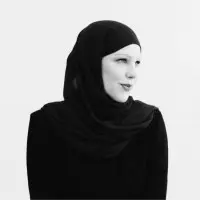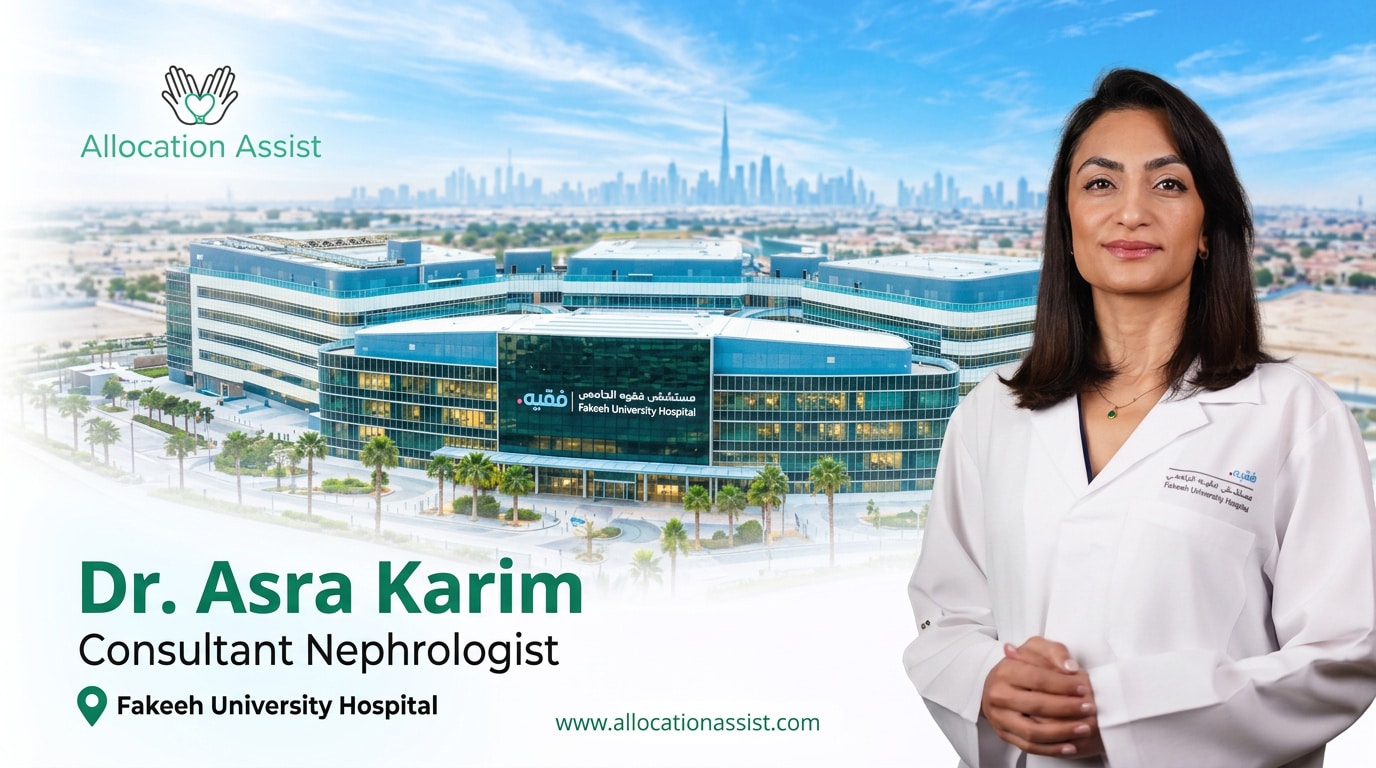
A doctor’s expertise travels with them. The right opportunity gives it new possibilities. For Dr. Asra Karim, Consultant Nephrologist at Fakeeh University Hospital, a new chapter in Dubai has been a chance to build on more than 13 years of UK clinical experience, connect with fellow doctors and bring that knowledge to a new community of patients.
Who Is Dr. Asra Karim?
Dr. Karim is a Consultant Nephrologist at Fakeeh University Hospital in Dubai. She brings over 13 years of UK clinical experience to the role.
Her training includes a renal transplantation fellowship at Queen Elizabeth Hospital Birmingham, giving her depth in one of the most complex areas of kidney care. She is also among the consultants whose successful relocation to Dubai Allocation Assist has profiled.
How Does She Approach Kidney Care?
Her approach starts from the person rather than the diagnosis. Behind every kidney condition is someone whose history, lifestyle and circumstances shape the care they need.
That person-centred view is especially relevant in nephrology, where treatment is often long-term and has to fit around a patient’s daily life.
What Has Her First Year in Dubai Looked Like?
One year into her move, she continues to learn, collaborate and contribute. She recently attended the World Kidney Conference in Dubai, keeping her connected with the wider nephrology community in the region.
The Allocation Assist Middle East team finds it rewarding to see experienced doctors like her finding room to grow and make a meaningful difference after relocating.
What Do UK Nephrologists Need to Work in Dubai?
Every doctor practising in Dubai is licensed by the Dubai Health Authority. For UK-trained nephrologists, the DHA licence process covers verifying qualifications, specialist training and good standing before a hospital can activate the licence.
Transplant fellowships and subspecialty training, like Dr. Karim’s, are worth presenting clearly, as they help hospitals see where a consultant can add to their renal service.
How Allocation Assist Supports UK Consultants Moving to Dubai
Dr. Asra Karim’s first year in the Gulf shows how the right role keeps a specialist learning and contributing. Matching doctors to roles like that is what Allocation Assist does. As a medical jobs consultancy in Dubai, Allocation Assist has spent over 11 years placing UK and other Western-trained consultants across the UAE, Saudi Arabia and Qatar. UK consultants considering the move can contact Allocation Assist or call +971 4 273 3477.
Key Areas of Support
- Hospital matching: renal and transplant services where your subspecialty training adds value.
- Licensing and regulatory navigation: DHA, DOH, MOHAP and SCFHS applications, from DataFlow to final approval.
- Interview and salary negotiation support: presenting fellowship experience clearly and reviewing package terms.
- Relocation and family logistics: housing, schools and settling into Dubai.
- Ongoing support after you arrive: contact that continues through your first year and beyond.
Frequently Asked Questions
What do UK doctors need to work in Dubai?
UK doctors need a Dubai Health Authority licence, which involves verifying qualifications, specialist training and good standing before a hospital activates it.
How long does it take a UK consultant to get licensed in Dubai?
For doctors trained in recognised countries, the full process usually takes around three months. Primary source verification through DataFlow accounts for roughly four to eight weeks of that.
How much do consultants earn in Dubai?
Western-trained consultants can earn a basic AED 80,000 to 90,000 a month, tax free, often with housing, schooling and flight allowances added.
What documents are needed for a DHA licence?
You need your medical degree and transcripts, a current licence from your last country of practice, a certificate of good standing issued within the last six months, a passport copy and a photo. Surgeons also need a two-year logbook signed by a medical director.
Can I get a DHA licence before I have a job offer?
Yes. You can complete registration first, and it becomes a full licence once a hospital sponsors you. Running licensing and doctor placement together means you can start soon after accepting an offer.
Which licence do doctors need outside Dubai?
Abu Dhabi, Al Ain and Al Dhafra require a DOH licence, while Sharjah and the northern emirates use MOHAP. Saudi Arabia licenses doctors through the SCFHS and Qatar through the QCHP.