Your European training positions you for Dubai’s most urgent hiring gaps: cardiothoracic surgery, neurosurgery, and robotic-assisted procedures where fellowship credentials carry serious weight. Non-surgical specialists in cardiology, oncology, and dermatology are equally sought after, especially since cosmetic dermatology captures nearly a third of Dubai’s billion-dirham medical tourism market. With 86% of cancer centers reporting staffing challenges and preventive cardiology projected to reach USD 65.92 million by 2030, understanding medical specialties in Dubai for European doctors and which specialties offer the strongest returns matters. Career growth for European doctors in Dubai is promising, particularly in high-demand areas. As the healthcare landscape in Dubai continues to evolve, adapting to new technologies and practices will be essential for sustained success.
Surgical Specialties Where EU Doctors Fill Dubai’s Gaps
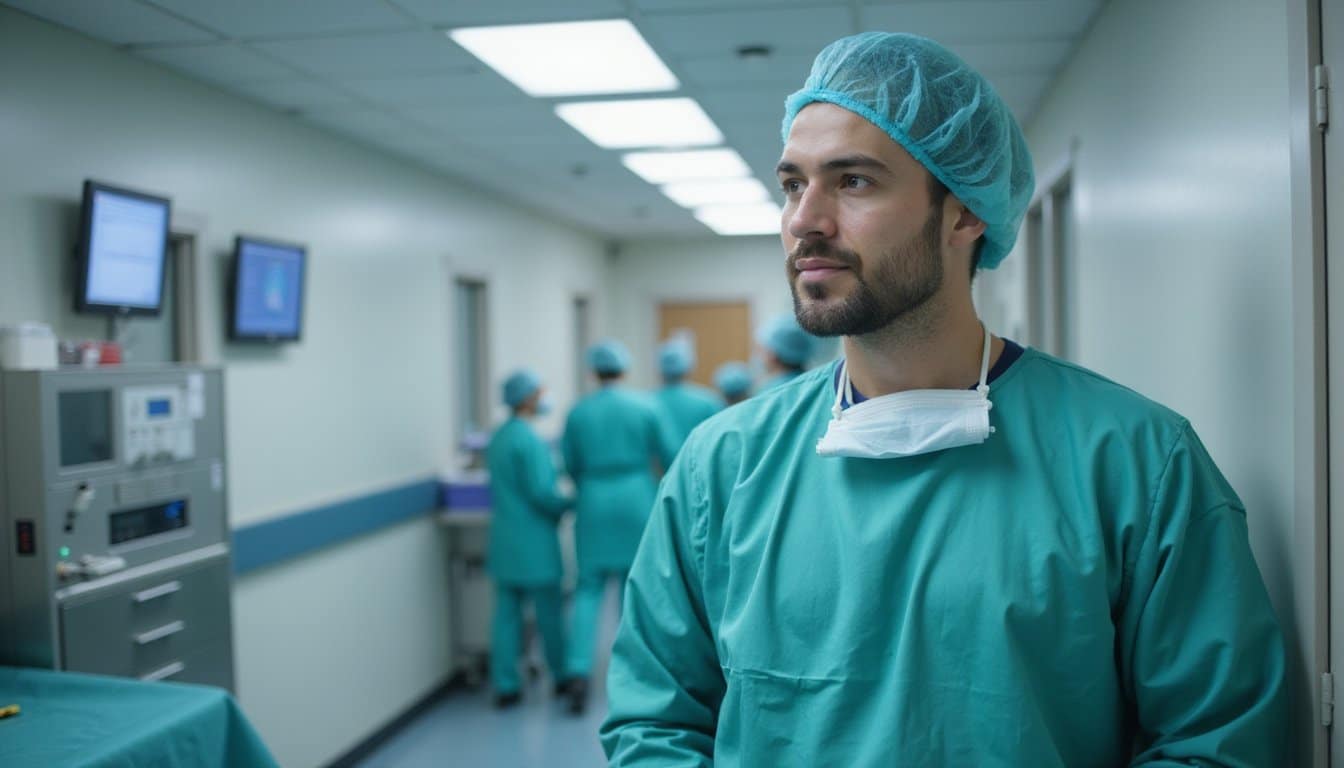
While Dubai’s healthcare system has expanded rapidly, critical gaps persist in surgical specialties where European-trained doctors hold distinct advantages. You’ll find the strongest doctor demand dubai in cardiothoracic surgery, neurosurgery, and orthopedics, fields where fellowship credentials carry significant weight.
When evaluating medical specialties dubai doctors should target, consider minimally invasive and robotic surgery. Dubai’s tertiary centers operate da Vinci systems, yet trained surgeons remain scarce. Your EU certification in laparoscopic techniques positions you competitively for these high-revenue roles. The 14 new medical towers rising in Dubai Healthcare City are creating unprecedented opportunities for surgeons skilled in advanced procedural techniques. Specialty demand trends for European doctors in Dubai indicate a growing need for specialists in specific fields. As the healthcare landscape evolves, understanding these trends can help you align your skills with market demands.
Oncology surgery presents another opportunity. With 86% of cancer centers reporting staffing challenges, your european physician specialty fit uae strengthens considerably if you’ve completed tumor resection fellowships. Trauma surgery also faces critical shortages as Dubai’s population approaches 5.8 million, creating sustained demand for qualified surgical specialists. Plastic and reconstructive surgery also ranks among the most in-demand surgical specialties, offering European surgeons additional pathways into Dubai’s competitive healthcare market.
Non-Surgical Specialties Dubai Patients Need Most
You’ll find Dubai’s non-surgical specialties offer strong opportunities if you’re positioned in high-demand fields like internal medicine, where chronic disease management drives consistent patient volume. Cardiology services are expanding rapidly, with private providers investing heavily in cardiac labs and preventive care programs that favor European-trained interventional specialists. Dermatology, particularly cosmetic and laser procedures, commands premium earnings exceeding AED 100,000 monthly, fueled by medical tourists and an affluent local population seeking aesthetic treatments. Oncology also presents significant career potential, as specialists who can validate AI-driven diagnostics at 92% accuracy are increasingly sought after in multidisciplinary treatment teams. European doctors benefit from working in JCI-accredited hospitals equipped with advanced medical technology that matches or exceeds standards found in their home countries.
Internal Medicine Demand Growth
As Dubai’s chronic disease burden intensifies, internal medicine specialists find themselves at the center of the emirate’s healthcare transformation. You’ll discover that DHA’s shift toward specialty-driven care models creates substantial opportunities for European-trained internists with subspecialty credentials.
| Demand Driver | Infrastructure Gap | Your Opportunity |
|---|---|---|
| Chronic disease rise | 2,160 outpatient rooms needed by 2030 | Consultation-based practice |
| Daycare treatment shift | 60%+ surgeries moving outpatient | Continuous care management |
| Aging population | 675 rehab beds needed by 2030 | Long-term patient relationships |
Your European training in evidence-based chronic disease management aligns directly with Dubai’s strategic priorities. The emirate’s private sector favors revenue-generating, patient-facing specialties, internal medicine delivers both. You’re positioned to build sustainable practices around diabetes, cardiovascular, and metabolic disorder management. With the UAE holding the highest diabetes prevalence in the MENA region at 19.5%, your expertise in metabolic disease management addresses a critical and growing patient population.
Cardiology Services Expansion
Cardiology represents one of Dubai’s most lucrative specialty markets for European physicians, with the UAE’s preventive cardiology sector alone projected to surge from USD 43.93 million in 2024 to USD 65.92 million by 2030.
You’ll find demand driven by concrete factors: 8,000 to 10,000 annual strokes, a growing elderly population exceeding 110,000 males aged 65+, and rising diabetes and obesity rates. Dubai’s healthcare infrastructure now spans over 5,020 facilities with advanced catheterization labs and specialized cardiac centers. The market presents particular opportunity given that coronary artery disease dominates the preventive cardiology segment with approximately 34% market share.
Your European training in interventional procedures positions you well here. The interventional cardiology devices market is expanding at 5.08% CAGR, while ambulatory surgical centers increasingly seek specialists for same-day cardiovascular procedures. These ambulatory centers represent significant growth potential, expected to expand at 8.19% CAGR as day-case surgery becomes more prevalent. Dubai’s sixth-place global ranking in medical tourism means you’ll treat both local and international patients seeking advanced cardiac care.
Dermatology For Medical Tourists
Dermatology stands out as Dubai’s most patient-dense specialty for medical tourists, capturing 27-31% of all health tourism traffic. You’ll find this specialty particularly lucrative, with 691,000 health tourists spending over AED 1 billion in 2023 alone.
Your European credentials position you well for this market. GCC and European patients specifically seek practitioners trained in advanced non-surgical techniques, CO2 laser resurfacing, dermal fillers, Botox, and skin tightening procedures. Women comprise 58% of health tourists, largely seeking dermatology and gynecology services.
Dubai’s infrastructure supports your practice ambitions. With 386 licensed dermatologists across 277 facilities, you’ll access cutting-edge technology while serving a diverse patient base from Asia (39%) and Europe/CIS (22%). These advanced medical centers feature cutting-edge technology operated by highly skilled professionals providing exceptional care. The UAE’s medical tourism market trajectory toward $4.4 billion by 2033 signals sustained demand for skilled dermatologists. Healthcare providers here adhere to international quality standards, ensuring your European training aligns seamlessly with local practice requirements.
Medical Tourism Niches Where EU Training Wins
European medical credentials carry significant weight in Dubai’s medical tourism market, where your training background directly influences patient trust and referral patterns.
Your EU training positions you competitively in plastic surgery, where European patients comprise 28% of the market, the second-largest segment. European aesthetic medicine certifications transfer seamlessly to Dubai’s regulatory framework, giving you immediate credibility. With the global medical tourism market valued at over USD 31 billion in 2024, positioning yourself in high-demand specialties offers substantial growth potential.
Hospitalization services present another strong opportunity. European countries lead this category at 39% of medical tourists, and patients expect facility standards matching what they’d find at home. Your familiarity with these expectations becomes a marketable asset. The UAE has invested heavily in establishing world-class medical facilities with high treatment standards for both citizens and international visitors, particularly from the Middle East and Africa.
Orthopedic surgery offers steady demand, with European patients representing 23% of cases. Your training from recognized European institutions maintains competitive advantages, particularly when combined with Dubai’s advanced diagnostic technology. These niches reward credential-conscious practitioners who understand cross-border patient expectations.
Dubai Salary Expectations by Medical Specialty

Your European credentials position you for premium compensation across Dubai’s medical industry, but salary expectations vary dramatically by specialty. Consultant-level neurosurgeons command the highest monthly salaries at AED 90,000 to AED 160,000, while general practitioners start around AED 25,000 to AED 40,000, a gap that reflects Dubai’s emphasis on revenue-generating specializations. Western-trained surgeons benefit from a 15-25% salary uplift over non-Western counterparts, making your EU training a tangible financial asset in contract negotiations. Orthopedic surgeons also rank among the top earners, with annual compensation reaching up to AED 900,000 for those at the consultant level. Beyond base salaries, private sector positions often include performance bonuses and allowances that can significantly increase your total compensation package.
Consultant Pay Ranges
When evaluating relocation to Dubai, understanding consultant pay ranges helps you set realistic financial expectations and negotiate effectively.
Entry-level consultants typically start between AED 45,000 to 60,000 monthly, translating to AED 540,000-720,000 annually. If you’re bringing 5-10 years of experience, expect AED 70,000 to 85,000 monthly. Senior consultants with 8-15 years command AED 700,000 to over AED 1 million annually, with top performers reaching AED 151,000 monthly in specialized fields.
Your Western credentials carry significant weight. European-trained physicians typically secure 15-25% higher compensation than regional counterparts. Holding a Masters degree results in a 42% increase over bachelors-only peers in annual earnings. Private sector roles often include performance bonuses reaching 35% of base salary, plus tax-free earnings and 30 days paid leave.
Senior orthopedic surgeons average AED 800,000-900,000 annually, while experienced specialists in high-demand fields can negotiate packages exceeding AED 1.4 million.
Specialty Income Comparisons
Because specialty selection directly impacts your earning potential, understanding Dubai’s compensation hierarchy helps you position yourself strategically in the market. Western-trained specialists consistently command premium rates, with surgical disciplines outpacing medical ones.
| Specialty | Monthly Salary (AED) |
|---|---|
| Neurosurgery (US-trained) | Up to 160,000 |
| General Surgery (Western) | 80,000-90,000 |
| Internal Medicine (Western) | 60,000-75,000 |
| Consultant Average | 70,000 |
| General Practitioner | 15,000-30,000 |
You’ll notice interventional specialties and procedure-heavy fields dominate the upper tiers. Cardiothoracic surgeons, interventional cardiologists, and orthopedic specialists benefit from Dubai’s cardiovascular disease burden and sports medicine demand. Your European credentials position you favorably, though ABMS certification grants the highest salary bands. Tax-free earnings amplify these figures greatly compared to European take-home equivalents.
EU Credential Recognition and Licensure in Dubai
European credentials carry significant weight in Dubai’s healthcare market, but you’ll need to navigate a structured verification process before practicing.
The Dubai Health Authority (DHA) requires your university to appear in the WHO’s Avicenna Directory. Western European doctors benefit from Option 1 exemptions, bypassing the DHA Computerized Based Test entirely. Irish-registered physicians who’ve passed the PRES Exam enjoy similar advantages.
Key documentation you’ll need:
- Good Standing Certificate dated within six months of application
- Certified diploma copies with detailed CV and experience verification
- Minimum two years post-internship clinical experience
- Surgical logbooks covering your last two years of practice
Board certifications like ABMS credentials determine whether you’re positioned as specialist or consultant, directly impacting your earning potential and scope of practice.
Why Dubai’s Specialist Shortage Works in Your Favor

Dubai’s healthcare system is running up against a wall, and that creates genuine opportunity for European specialists. The emirate needs 6,000 additional physicians immediately, with critical gaps in cardiology, oncology, and trauma care. Abu Dhabi’s prioritizing psychiatry, emergency medicine, and intensive care, fields where your EU training carries significant weight.
You’re entering a market where private healthcare spending grows at 9.5% annually and medical tourism generates AED 1 billion yearly. That 700,000 international patients in 2023 strained existing staff, intensifying demand for specialists in dermatology and dental care.
The infrastructure boom tells the story: 14 new medical towers in Dubai Healthcare City and over 30 centers of excellence need staffing. With projections showing 5.8 million residents by 2040, your specialized credentials aren’t just welcome, they’re essential.
Ready to Take Your Career to Dubai?
Building a medical career in the UAE raises a lot of questions, and it helps to have someone who knows the answers. At Allocation Assist, we help doctors at every point of the process, from reading up in Working as a Doctor in the UAE: A Guide to practical support with our DHA license consultancy. If you would like to talk it through, you can book a free consultation.
Frequently Asked Questions
Can European Doctors Practice in Dubai While Maintaining Their EU Medical License?
Yes, you can practice in Dubai while keeping your EU medical license active. The DHA issues its own license separately, it doesn’t replace or transfer your European credentials. You’ll need to maintain your home country license as active and unrestricted throughout the process, since DHA requires this for eligibility. Think of it as holding dual credentials: your EU license stays intact while you obtain additional DHA authorization to practice in Dubai.
How Long Does the Typical Relocation Process Take for EU Physicians?
You’ll typically navigate a 3-6 month timeline from initial application to practicing in Dubai. Your DataFlow verification alone takes 6-12 weeks, followed by DHA exams and assessments spanning another 2-3 months. If you’re a consultant in high-demand specialties like oncology, you might fast-track this to 2-3 months. Watch out for Q1/Q4 peak periods, they’ll add 4-6 weeks. Guarantee your documents are complete to avoid costly 1-2 month delays.
Do European Doctors Need to Learn Arabic to Work in Dubai?
No, you don’t need to learn Arabic to work in Dubai. The DHA licensing process, Prometric exams, and clinical assessments are all conducted in English. You’ll need English proficiency certification (IELTS 6+, TOEFL 550+, or OET C+) unless you graduated from an English-medium institution. Private healthcare facilities primarily operate in English, and hospitals typically provide translators for Arabic-speaking patients. However, learning basic Arabic phrases can enhance your patient rapport and cultural integration.
Which Dubai Hospitals Specifically Recruit From European Union Countries?
Several Dubai hospitals actively recruit from EU countries. You’ll find VPL Healthcare Private Hospital targeting European specialists in radiology and general practice, offering full DHA registration support. Mediclinic Middle East seeks internationally qualified doctors across their network. Medacs Healthcare specifically accepts European CCT equivalents for consultant positions. Dr Expat and Allocation Assist specialize in placing UK and European doctors, connecting you with 80+ prestigious facilities throughout Dubai.
Are Part-Time or Locum Positions Available for European Specialists in Dubai?
Yes, part-time and locum positions exist for European specialists in Dubai’s expanding private healthcare market. You’ll need DHA licensing regardless of your employment type, and JCI-certified hospitals like Mediclinic and American Hospital regularly employ Western-certified doctors. The sector’s rapid growth and doctor shortage, just 28 physicians per 10,000 residents, creates flexibility in staffing arrangements. DrExpat can guide you through the 2026 DHA licensing process for various employment types.