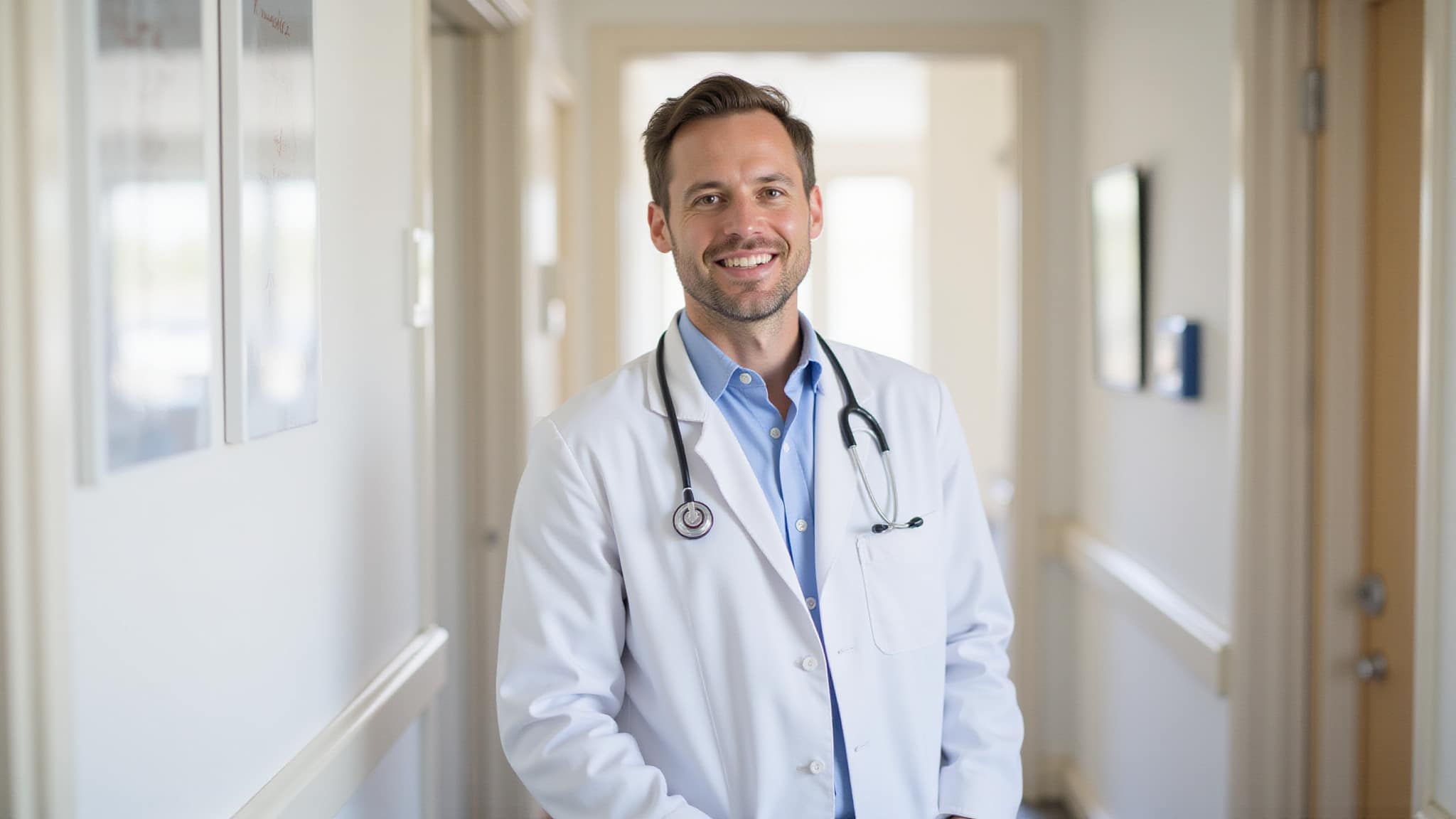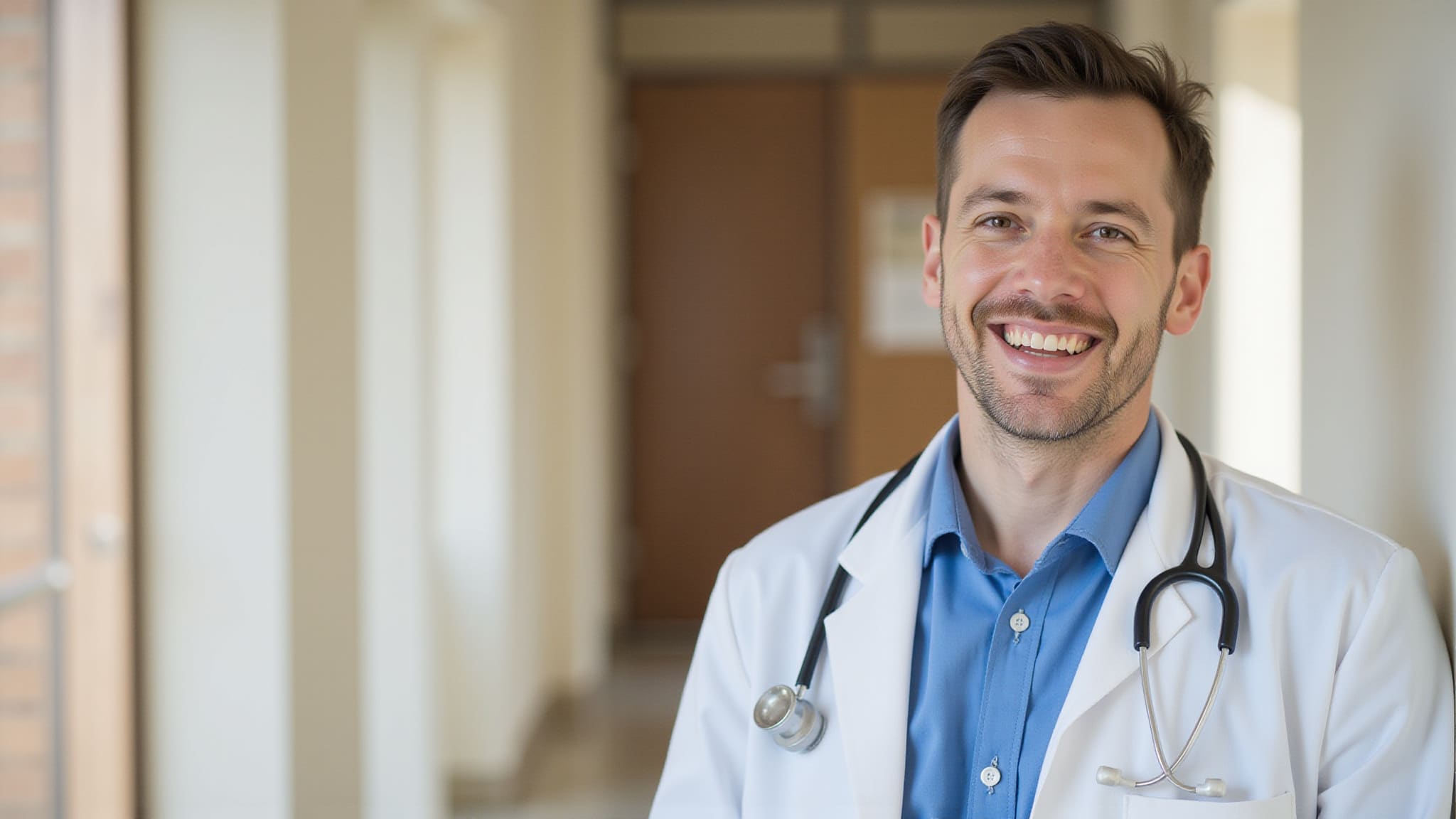
Some doctors leave because the work fell apart. Others leave because it did not, and that turns out to be the harder thing to act on. Dr. Tiago Moreira spent fifteen years at Karolinska and reached the point where every external measure of a career was already met, then moved to Abu Dhabi as Head of Stroke Services. His full story appears in the original feature on LinkedIn, What Comes After You’ve Built Everything. What follows is why an accomplished European specialist looked to the Gulf, and what the move involved.
Why Do Accomplished Specialists Leave a Hospital Like Karolinska?
The version of a career that nobody warns about arrives slowly. After the research, the training, the years across countries and languages, the department title, the papers, and the residents who became better clinicians, the only thought left one morning is that he had arrived, followed by the same thought the next morning, and the one after that. Why NHS radiologists move to Dubai is often driven by the allure of new opportunities and a different lifestyle. The promise of a tax-free income and a warm climate can be hard to resist.
Moreira finished his residency at Karolinska and stayed fifteen years, long enough to help relocate the hospital itself, spending four years as project manager for the move to a new site. It had become something close to family. At the same time, Sweden’s healthcare system was contracting in ways that had nothing to do with medicine: budget pressures, bed cuts, nurse shortages, and a post-pandemic slowdown that felt structural. As Head of Section, he was managing cuts as much as he was managing care. He was fifty years old, with one version of his career complete.
“Something was telling me I need something new, I need something different.”
What Made the Gulf the Right Move at This Stage?
He had been coming to the Gulf for conferences, and what he noticed was direction. Hospitals were being built rather than consolidated, technology acquired rather than deferred, and the best-trained physicians actively recruited from Canada, the UK, the US, and Europe because the systems needed them and had the resources to bring them in. He had spent years watching European systems negotiate with their own limitations. Here the question was not what could be preserved. It was what could be built. As he contemplated the rapid development in the region, he began to think about the questions to ask before moving to the Gulf. Understanding the healthcare landscape and the differences between systems would be crucial for anyone considering such a transition.
What Is STMC, and What Did the Role Involve?
Allocation Assist placed him at SEHA Sheikh Tahnoon Bin Mohammed Medical City (STMC) in Al Ain, Abu Dhabi, as Head of Stroke Services, where he arrived in February 2025. STMC is a 718-bed tertiary medical city affiliated with UAE University, with over 850 physicians across more than 35 specialties. Its stroke programme had earned American Heart Association comprehensive stroke centre accreditation in December 2023, more than a year before he arrived. Many medical professionals are drawn to opportunities abroad, which leads to questions about why US physicians move to Dubai. The appeal often lies in competitive salaries, a high standard of living, and the chance to work in cutting-edge facilities.
He assembled a team and built the stroke pathway across every discipline it touches: EMS, emergency, neurology, neurosurgery, radiology, interventional radiology, anaesthesia, stroke unit nursing, physiotherapy, occupational therapy, rehabilitation, social work, case management, and patient relations. Nine months after he arrived, the programme received the Medical Quality Index award for Q4 2025.
“I feel we build a communion, really. We are from so many different backgrounds, but in these moments we wish each other well, and things work well.”
Did Moving Slow His Research and Academic Work?
It did the opposite. He co-authored a paper on AI-assisted tele-stroke technology across the SEHA network in November 2025, and was appointed Adjunct Associate Professor at UAE University the same year. The research stayed live and the academic work continued after the move.
Why Are Stroke Specialists So Needed in the UAE Right Now?
Between 8,000 and 10,000 people in the UAE have a stroke every year, and the patient profile is unlike the West. Two studies published in 2025 and 2026 found the mean age of stroke patients in the region is about a decade younger than in Western countries. In one Abu Dhabi tertiary-centre cohort admitted between October 2024 and March 2025, the median age was 40.
| Stroke patient profile | Western countries | UAE |
|---|---|---|
| Typical patient age | Older, elderly-skewed | About a decade younger |
| Median age (Abu Dhabi cohort) | Higher | 40 |
| Patients under 45 | Lower share | Around 1 in 4 |
| Patients aged 45 to 65 | Lower share | Nearly half |
The risk-factor burden is severe, with hypertension, diabetes, and atrial fibrillation presenting earlier in life and with less prior management than in Europe or North America. This is an acute crisis in working-age people, in a population still growing and still building the infrastructure to meet it. For a specialist with two decades in cerebrovascular care, the demand is real rather than ornamental.
What Keeps Him in Stroke Medicine?
The answer goes back to a room in Lisbon. As a teenager he watched his grandmother have a stroke and try to find a word that had been hers her whole life, with nothing to offer her but aspirin and presence. The field has moved considerably since the 1990s, through thrombolysis and thrombectomy, time-critical interventions that can restore blood flow to a brain mid-infarct. Asked what he loves about stroke medicine, he answers in one sentence.
“The next day the person, instead of being paralysed, she’s walking and talking.”
Thinking About Relocating to Abu Dhabi?
Relocating to the UAE is a major step, and it goes far more smoothly with the right team beside you. At Allocation Assist, we help doctors at every point of the process, from reading up in Relocating to Dubai to practical support with our DOH license consultancy. If you would like to talk it through, you can book a free consultation.
Frequently Asked Questions
Why are experienced doctors moving from Europe to the UAE?
Many point to the difference between maintaining a contracting system and building a growing one. In Dr. Moreira’s case, the Gulf was investing in new hospitals and technology and actively recruiting senior physicians, while his European system was managing budget and staffing cuts.
What is SEHA Sheikh Tahnoon Bin Mohammed Medical City?
STMC in Al Ain is a 718-bed tertiary medical city affiliated with UAE University, with more than 850 physicians across over 35 specialties.
What accreditation does the STMC stroke programme hold?
It holds American Heart Association comprehensive stroke centre accreditation, earned in December 2023. Nine months after Dr. Moreira arrived, the programme also received the Medical Quality Index award for Q4 2025.
Can specialists continue research after moving to the UAE?
Yes. Within his first year in Abu Dhabi, Dr. Moreira co-authored a paper on AI-assisted tele-stroke technology and was appointed Adjunct Associate Professor at UAE University.
Why is stroke care a growing need in the UAE?
Between 8,000 and 10,000 people in the UAE have a stroke each year, and patients present about a decade younger than in Western countries. In one Abu Dhabi cohort the median age was 40, with around a quarter of patients under 45, driven by high rates of hypertension, diabetes, and atrial fibrillation.
How does a senior specialist arrange a move to the Gulf?
Most work with a placement partner that knows the hospitals and the licensing process. Allocation Assist placed Dr. Moreira at STMC and has spent eleven years placing hundreds of Western-trained specialists across the UAE, Saudi Arabia, and Qatar.