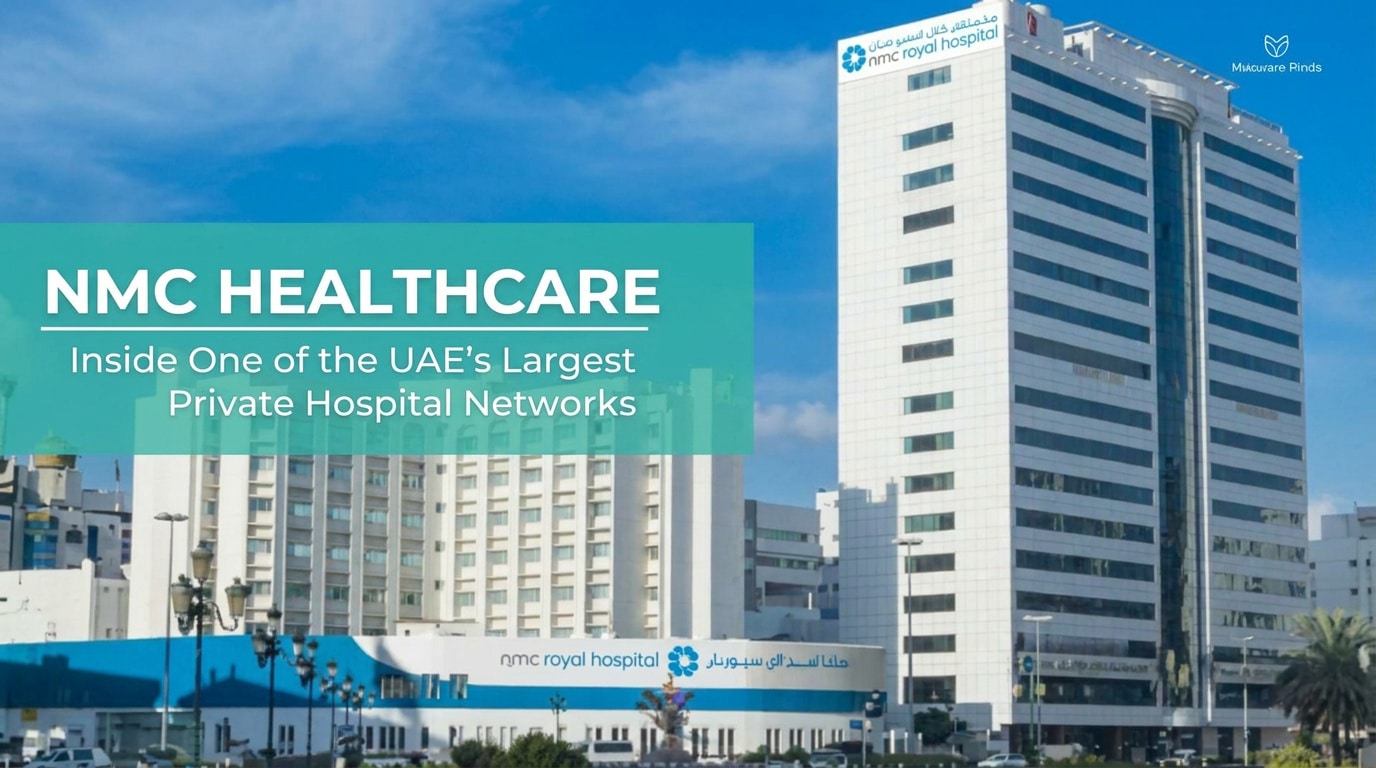
A medical recruitment agency is hired by a hospital or clinic to fill a specific vacancy. It sources doctors, screens their credentials, arranges interviews, and presents a shortlist, and it is paid by the employer only when a placement is made. In Dubai, the model comes with an extra layer: agencies must hold a licence from the Ministry of Human Resources and Emiratisation, and the law forbids them from charging you a single dirham. Here is how the process actually runs, step by step, and where its limits sit for a doctor moving from abroad.
Why Hospitals in Dubai Use Medical Recruitment Agencies

The short answer is speed at scale. Dubai’s health sector reached roughly 5,800 licensed facilities in 2025, with the private workforce passing 69,400 professionals, growth of more than 8% in a single year. No hospital HR department can staff that expansion from walk-in applications, so facilities brief external agencies to reach doctors in the UK, India, Europe, and beyond.
For you as a candidate, this creates a genuine advantage. Agencies hold vacancies that never reach public job boards, because a facility replacing a department head or opening a new unit often prefers a quiet search over an advertisement. A well-connected recruiter can put your CV in front of a hiring manager who would never have seen it otherwise. Recruiter outreach is also constant: in a 2023 AMN Healthcare survey, 56% of final-year residents said they had received 100 or more job solicitations during training, the highest figure since the survey began in 1991. If you are a specialist with Western training, the recruiters will find you. The question is what happens after they do.
How the Medical Recruitment Process Works in Dubai, Step by Step
The mechanics are broadly the same whether the agency sits in Dubai, London, or Dallas. The sequence runs like this:
1. The facility briefs the agency. The hospital defines the role, specialty, required experience, and package range. This brief is the agency’s contract, and everything it does afterwards is measured against it.
2. Sourcing and screening. The recruiter searches its database, posts the role, and approaches doctors directly. Screening at this stage covers your CV, qualifications, and basic eligibility, not the formal credential verification Dubai’s regulators require later.
3. Shortlisting. The agency presents a small group of vetted candidates. Facilities pay for filtered quality, so a shortlist of three to five strong profiles beats a folder of fifty.
4. Interviews and feedback. The recruiter coordinates scheduling, usually by video for international candidates, relays feedback both ways, and keeps the process moving.
5. Offer and signature. The facility extends the offer, the recruiter passes it on, and once you sign, the agency invoices its fee. For most agencies, this is where the engagement ends.
Notice what is missing from that list for a Dubai move: your DHA licence, DataFlow verification, document attestation, and your family’s visas. None of it belongs to the recruitment model, because none of it is what the facility is paying for. In Dubai that gap matters more than anywhere, since the full licensing process runs three to six months and your job offer cannot become a start date without it, as our UAE medical licensing guide sets out in detail. That gap, more than anything else, is why a recruiter is not enough for international doctors.
How Agencies Get Paid, and What UAE Law Requires

Agencies work on one of two commercial models. Under a contingency arrangement, the agency is paid only when its candidate is hired, with fees in physician hiring typically running 20 to 25% of first-year compensation. Under a retained arrangement, used for senior or hard-to-fill posts, the facility pays in staged instalments regardless of outcome. Either way, the money comes from the employer.
In the UAE, that is not just convention but law. Article 6 of Federal Decree-Law No. 33 of 2021 prohibits charging a worker the fees and costs of recruitment, directly or indirectly. On top of that, any firm carrying out employment mediation must be licensed by MOHRE, and a mediation agency licence requires a bank guarantee of at least AED 300,000 held for the life of the licence. A legitimate agency has real money and a federal licence on the line, which is exactly why you should verify both before handing over documents.
What a Recruiter Covers, and What Remains Your Responsibility
| Part of Your Move | Handled by the Agency | Left With You |
|---|---|---|
| Finding open vacancies | Yes, including unadvertised roles | |
| CV presentation and interviews | Yes, coordinated end to end | |
| Salary and package negotiation | Relays offers only, the facility is its client | Negotiating your own terms |
| DHA licensing and DataFlow | Sheryan application, verification, exams | |
| Document attestation | Degrees, marriage and birth certificates | |
| Family visas, insurance, schooling | Sequencing all three after arrival |
The right-hand column is not a criticism of recruiters. It is simply the boundary of what a facility pays a placement fee for. Doctors who want that column managed alongside the job search typically work with a consultancy model instead, where licensing support, such as DHA license consultancy sits inside the engagement rather than outside it. Our full comparison of career consultancy vs medical recruitment maps that boundary in detail.
How to Work Safely With a Recruitment Agency in Dubai

A recruiter works best when you treat the relationship as professionally as any referral. Be precise about your specialty, target emirate, salary expectations, and timeline, because vague briefs produce irrelevant roles. Ask which facilities the agency actually holds mandates with, and request that no submission goes out without your written sign-off. Duplicate submissions, where two agencies send your CV to the same hospital, can trigger representation disputes that stall your application entirely.
Three checks separate legitimate operators from the rest. First, confirm the MOHRE licence, or for an overseas agency, its home-country registration. Second, refuse any request for payment, since the law is unambiguous on that point. Third, ask what happens after you sign. If the honest answer is “our role ends there,” you know exactly what you are getting, and you can plan for the licensing and relocation work that follows, which our guide to working as a doctor in the UAE maps out.
Thinking About a Move to Dubai?
A good agency can open the door, but for an international doctor, the door is only the first of many. Allocation Assist has been placing Western-trained doctors in leading hospitals across Dubai and the Gulf since 2015, handling the search, the licensing, and the relocation as one process. Browse our current job openings or book a free consultation, and we will tell you honestly what your options look like.
Frequently Asked Questions
Do I Have to Pay a Medical Recruitment Agency in Dubai?
No. Federal Decree-Law No. 33 of 2021 prohibits charging workers any recruitment fees or costs, directly or indirectly, and only MOHRE-licensed entities may carry out employment mediation in the UAE. Legitimate agencies are paid by the hiring facility after you start. Any request for a placement, registration, or file-processing fee is a legal red flag, and you should verify the firm’s licence before sharing documents.
Can an Agency Get Me a Job in Dubai Before I Hold a DHA Licence?
Yes, and this is the normal sequence. Facilities routinely issue offers to doctors who have not completed licensing, because the DHA licence only activates once your employer submits an activation request through Sheryan. What the agency cannot do is run the licensing itself. Budget three to six months between accepting an offer and treating your first patient, longer if a Prometric exam is required.
How Do Recruiters Find Doctors in the First Place?
Through their own candidate databases, job boards, professional networks, and direct outreach on platforms where physicians are visible. The volume is significant: 56% of final-year residents in a 2023 AMN Healthcare survey reported 100 or more job solicitations during training. If a recruiter contacts you cold, treat it as an unverified lead until you have confirmed the agency’s licence and the mandate behind the role.
Should I Sign Up With More Than One Agency?
You can, but manage it carefully. If two agencies submit your CV to the same hospital, the duplicate submission can spark a dispute over who represents you and complicate your candidacy with that facility. Keep a written log of which facilities each agency has approached on your behalf, and instruct every recruiter that nothing goes out without your explicit confirmation.
What Is the Difference Between a Recruitment Agency and a Career Consultancy?
The client. An agency works for the hospital and is paid to fill a vacancy, so its involvement typically ends at your signature. A consultancy works with the doctor across the whole move, covering licensing, contract negotiation, and relocation for you and your family. If you already hold an active DHA licence, an agency alone may be enough. If you are moving from abroad, the gap between the two models is where delays usually happen, and our guide to recruiter or consultancy for doctors moving abroad helps you decide.