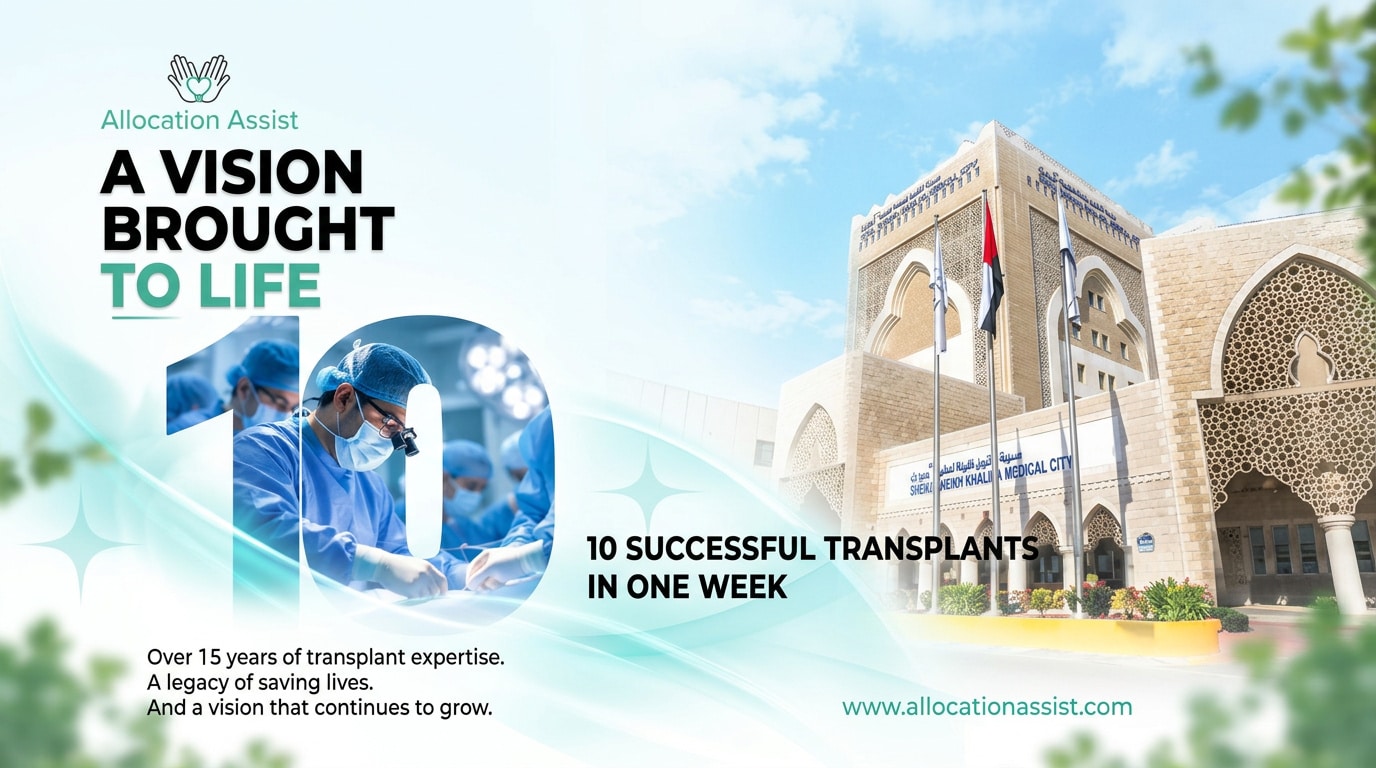
Some of the strongest signs of progress in healthcare are found in what a system becomes capable of delivering. Mediclinic Middle East has now completed its 100th kidney transplant, marking an important achievement for its transplant program and for patients across the region. Behind that number is a multidisciplinary team bringing years of clinical expertise, coordination and commitment to every stage of care, and for a Western-trained consultant weighing the Gulf, a milestone like that shows where advanced medicine is genuinely being practiced.
What Does a 100th Kidney Transplant Actually Signal?
The group has framed the result as an important achievement for its transplant program and for patients across the region. Reaching a hundred of a procedure this complex means the referral pathways, surgical scheduling, immunology support and post-operative follow-up have been repeated enough times to hold together reliably. That consistency is the real signal, because capability of this kind is still relatively scarce in the Gulf, so a program reaching this scale widens access for people who once travelled abroad for the same care. The service sits within Mediclinic Middle East’s wider UAE network, which gives it the support that complex surgery depends on.
Who Makes a Program Like This Work?
Behind that number is a multidisciplinary team bringing years of clinical expertise, coordination and commitment to every stage of care. A transplant is never a solo act, and it draws on surgeons, nephrologists, anaesthetists, transplant coordinators, pharmacists managing immunosuppression, and the nursing staff who carry recovery through its early, fragile weeks. For a physician joining from the UK, Europe or North America, that structure is familiar in shape, and it points to a setting where specialists work as part of a tightly connected clinical team rather than in isolation. Dr wisam muhsen at hms mirdif participates in this collaborative environment, ensuring that each patient’s journey is met with comprehensive support.
How Is the Program Connected to Dubai’s Wider Health System?
The program has not grown on its own. Mediclinic Middle East’s transplant specialists and wider clinical teams have collaborated closely with Dubai Health, with Mohammed Bin Rashid University of Medicine and Health Sciences (MBRU), and with the UAE’s wider organ donation and transplantation network to help build access to increasingly advanced transplant care. That same emphasis on clinical standards and quality is reflected elsewhere in the region, including Dr. Lina Yousif patient safety recognition. For a doctor evaluating the role, that web of partners points to academic links and shared protocols rather than a single site managing everything alone.
| Element of the program | What the source confirms |
|---|---|
| Milestone reached | 100th kidney transplant completed |
| Lead provider | Mediclinic Middle East |
| Clinical approach | Multidisciplinary team across the stages of care |
| Key collaborators | Dubai Health; MBRU; the UAE organ donation and transplantation network |
Why Are Organ Donors Central to This Milestone?
No surgical team reaches a hundred of these procedures without donors. Central to every transplant is also the generosity of donors and their families, whose decisions can give another person the chance to move forward with greater health, freedom and possibility. For clinicians, that is a reminder that transplant medicine rests on public trust and on a donation system that families are willing to take part in, which is what the UAE’s network has been working to strengthen. The new Breast Institute in Dubai aims to provide advanced care and support for patients facing breast health challenges.
What Does This Growth Mean for Western-Trained Doctors Considering the Gulf?
Milestones like this reflect the continued growth of highly specialized healthcare in the UAE, and the expertise, infrastructure and collaboration required to make that progress possible. As hospitals across the region continue to expand their services, strengthen their teams and develop new areas of care, they need senior clinicians who can help run and build those services. The same pattern is visible elsewhere in the Gulf, from new surgical capabilities to first-of-its-kind procedures at other leading providers. For a Western-trained doctor, that experience could become part of that continued progress rather than starting from a blank slate.
Conclusion
A hundredth transplant is a marker of direction more than a finish line, pointing to a health system still adding capability in complex, specialized fields. More than 500 doctors have not had to figure out their next move alone, and for an experienced consultant, a service reaching this scale is where that experience could become part of the region’s continued progress.
How Allocation Assist Supports Doctors Pursuing Medical Jobs in the Gulf
Allocation Assist Middle East is a healthcare jobs consultancy that has guided Western-trained doctors into the UAE, Saudi Arabia, and Qatar for more than 11 years, drawing on a network of 95+ institutions. The team pairs each physician with a suitable hospital, steers the Gulf licensing process, and helps secure a role matched to their training. For more on specialists we have supported, read about Dr. Ana Nóbrega Pinto’s work in cochlear implants and breast imaging advances with Dr. Shaista Meraj.
Key Areas of Support
- Hospital matching
- Licensing and regulatory navigation including DHA, DOH, MOHAP, and SCFHS
- Interview and salary negotiation support
- Family and household logistics
- Ongoing support after you arrive
Frequently Asked Questions
What does reaching a 100th kidney transplant say about a provider?
It points to a service that can deliver complex care consistently, with the surgical, nephrology and follow-up teams working together reliably rather than on a one-off basis.
Which organizations collaborated on the program’s development?
Dubai Health, Mohammed Bin Rashid University of Medicine and Health Sciences (MBRU), and the UAE’s national organ donation and transplantation network were the main collaborators, which lets the service draw on donor coordination and expertise from well beyond a single site.
Why do organ donors matter so much to transplant services?
A program can only grow as fast as consenting donors and their families allow, so donor generosity effectively sets the ceiling on how many patients a service is able to treat.
How long has Allocation Assist worked with doctors moving to the Gulf?
The consultancy has supported Western-trained physicians for more than 11 years and has helped over 500 doctors find roles across a network of 95+ institutions.
Which countries does Allocation Assist cover for medical roles?
Its focus is on positions for Western-trained doctors in the United Arab Emirates, Saudi Arabia, and Qatar.
What is drawing specialist doctors to the UAE right now?
The country keeps expanding advanced services, and achievements in fields such as transplant medicine signal the infrastructure and senior clinical demand that experienced consultants look for.