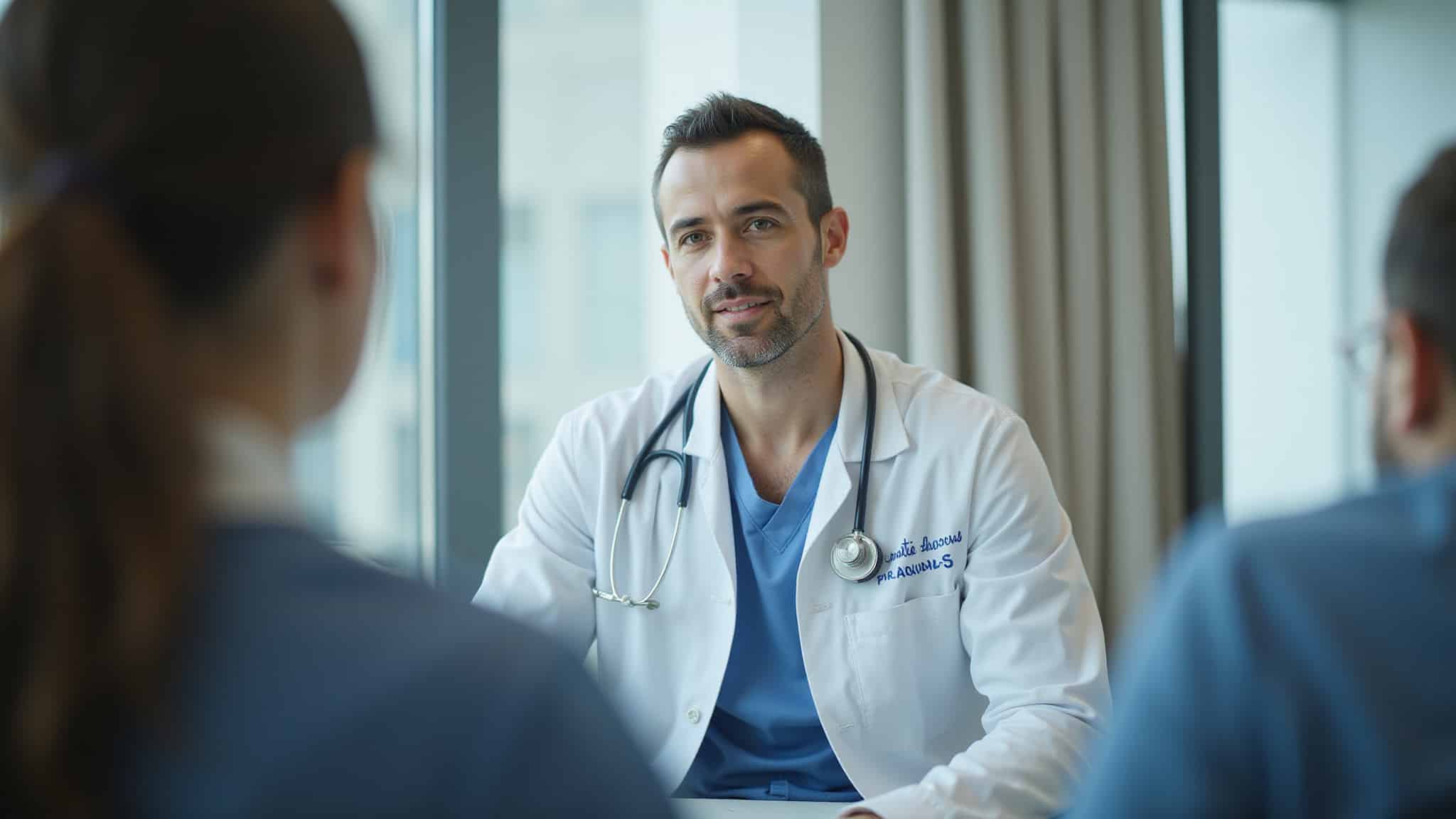
Dr. Michael McLaughlin shifted from NHS Scotland to American Hospital Dubai, where he assumed an ICU leadership role during COVID-19’s second wave. He applied international evidence-based protocols to manage complex cases within a multidisciplinary team.
His work also supports the UAE’s organ donation programme, which has grown steadily since its 2017 launch. Allocation Assist facilitated his licensing and relocation process, and his journey reveals key insights into crisis management, clinical adaptation, and advancing transplant practices abroad.
Dr Peter Baptista’s expertise in ENT is highly regarded within the medical community. He has been instrumental in developing innovative surgical techniques that enhance patient outcomes. Insights from Dr Rachel Kaminski highlight the importance of collaboration in healthcare settings, and NMC Royal Hospital services overview details a range of specialized medical care tailored to meet the community’s needs.
Key Takeaways
- Dr. McLaughlin relocated from NHS Scotland to American Hospital Dubai, motivated by COVID-19 reflections, family ties, and support from Allocation Assist.
- He quickly integrated into UAE healthcare, adapting to a private, internationally oriented model while maintaining rigorous UK-established clinical standards.
- His arrival coincided with Dubai’s second COVID-19 wave, where he applied evidence-based protocols within a multidisciplinary team to manage complex cases.
- He contributes to the UAE’s growing organ donation programme, leveraging ICU capabilities for donor identification and aligning with international best practices.
- Allocation Assist facilitated his seamless transition by supporting licensing, job placement, and family relocation to Dubai’s diverse international community.
From NHS Consultant to Dubai Relocation Decision
Dr. Michael McLaughlin built his medical career entirely in Scotland, completing specialist training in Glasgow and rising to the role of NHS Consultant in Anaesthesia and Intensive Care Medicine. Over five years as a consultant, his position encompassed clinical leadership, teaching, and active involvement in organ donation programmes, a role he found deeply rewarding.
The COVID-19 pandemic shifted his perspective. Amid global uncertainty and the associated challenges at the time, he reassessed both professional direction and personal lifestyle priorities. His sister-in-law, already working in Dubai as a teacher, consistently spoke about how much she enjoyed living and working there. With family already established in the city and Dubai’s expanding healthcare sector presenting a compelling opportunity, he contacted Allocation Assist on a cold, grey day in Glasgow to explore what the UAE could offer.
Transitioning into the UAE Healthcare System
Although he anticipated a lengthy process, the licensing and recruitment timeline moved faster than expected. Dr. McLaughlin secured a consultant post at American Hospital Dubai, one of the UAE’s highest-rated institutions, marking his entry into a highly resourced private healthcare environment. He arrived with his family in January 2021.
The shift demanded rapid adaptation to new systems, patient demographics, and operational workflows distinct from the NHS model. Despite these differences, he maintained the rigorous clinical standards established throughout his UK career. Experienced colleagues and access to advanced facilities proved instrumental in easing his integration, enabling him to assume his role as Director of Intensive Care with minimal disruption to patient care delivery.
Leading Intensive Care During the COVID-19 Pandemic
Arriving in Dubai just before the second wave of COVID-19, Dr. McLaughlin stepped into a high-pressure clinical environment that mirrored the intensity he had witnessed in the UK. The UAE’s National Crisis and Emergency Management Authority (NCEMA) mounted a swift and efficient response to the emerging pandemic, which involved government and private hospitals working together. Certain hospitals were designated to accept patients diagnosed with COVID, and American Hospital was one of a few private hospitals in Dubai taking COVID patients.
Dr. McLaughlin and his ICU team applied the same international, evidence-based protocols used in the UK for the management of COVID patients. The hospital’s advanced infrastructure and skilled multidisciplinary team enabled management of complex critical cases while maintaining continuity of care. American Hospital demonstrated some of the best COVID outcomes, both in the UAE and internationally, thanks to its well-equipped ICU and highly skilled and experienced doctors and nurses.
ICU Capabilities and Multidisciplinary Expertise
Beyond the pandemic response, the broader ICU infrastructure at American Hospital Dubai has positioned the unit to handle a wide range of critical care challenges. The ICU is extremely well equipped, enabling the team to manage highly complex cases effectively.
The hospital has expanded and increased the number of specialist consultants, including for intensive care. The unit now operates with five ICU consultants, each bringing expertise across intensive care subspecialties, including neuro-intensive care, cardiac-intensive care, trauma-intensive care, and paediatric-intensive care. This multidisciplinary model consolidates diverse clinical capabilities within a single facility, strengthening patient outcomes and enabling thorough management of complex conditions without the need for external referrals.
The Rapid Growth of Organ Donation in the UAE
The UAE’s organ donation programme has made remarkable progress since its launch. Federal Law No. 5, allowing transplantation of human organs and tissues after death, was enacted in 2016. The programme officially began in 2017 with 11 organs donated from 3 deceased donors. By 2022, this number had grown to 203 organs donated, equating to 5.4 donations per million population.
Since the start of the programme, 460 organs have been donated from deceased donors of 20 different nationalities, with recipients coming from 30 different nationalities. The numbers are continually increasing, and the UAE is on course to become the leading country in the region for donation rates, establishing itself as a regional hub and centre of excellence for organ transplantation.
| Indicator | Details |
|---|---|
| Legal framework | Federal Law No. 5 enacted in 2016 |
| Programme launch (2017) | 11 organs from 3 deceased donors |
| 2022 figures | 203 organs donated (5.4 per million population) |
| Total since inception | 460 organs from donors of 20 nationalities |
| Recipient diversity | Recipients from 30 different nationalities |
| Regional positioning | On course to become the leading country in the region |
The Hayat Platform
The Ministry of Health and Prevention has established the “Hayat” platform, meaning “life” in Arabic, which includes a website and smart app where individuals can register their wish to become an organ donor after death. This opt-in scheme has received some publicity, but more awareness is needed. The number of organs required for potential transplant patients, especially kidneys for those with renal failure, remains far higher than the number of donated organs, both in the UAE and worldwide.
American Hospital’s Role in Supporting Organ Donation
At the institutional level, American Hospital Dubai has positioned itself as a key contributor to the UAE’s organ donation framework. Its excellent ICU capabilities enable clinicians to identify potential donors and initiate established protocols efficiently. The hospital has robust policies and procedures in place, and all staff involved have undergone extensive training.
While organ transplantation is not currently performed at American Hospital, this remains an aspiration as the number of organ donations continues to grow. There are currently seven centres in the UAE where organ transplants are carried out. Cleveland Clinic Abu Dhabi serves as a multi-organ transplant centre and is therefore majorly involved in organ retrieval, along with other centres.
Training, Collaboration, and Learning from Global Centres
As the UAE’s organ donation programme continues to mature, international collaboration has played a pivotal role in accelerating its development. The programme has been learning from, and collaborating with, centres of excellence around the world. In particular, a partnership with the Donation and Transplant Institute (DTI), based in Barcelona, Spain, has been invaluable in the development of policies and procedures aligned with best practices and adapted to the local situation.
Training has included the DTI’s Advanced Transplant Procurement Management Course, and teams use their Transplant Procurement Management Manual. Beyond the more technical aspects, training addresses critical communication skills, particularly how to communicate well and have sensitive discussions with family members during the donation process. The organ donation team has also visited centres of excellence in the USA, Croatia, and other locations across Europe, to learn from their programmes and attend conferences.
Understanding the Organ Donation Process in Practice
The day-to-day reality of organ donation demands a rigorous, ethically grounded process that begins at the bedside. Once an individual is identified as a potential donor, a discussion always takes place with next of kin. These discussions are always handled carefully and sensitively, and are never rushed. All those involved in the programme are highly trained in the informed consent process and experienced in discussing with next of kin. All donations remain completely voluntary.
The Structured Process
- Identification and assessment, clinicians evaluate potential donors using detailed medical criteria.
- Family consultation, teams approach next of kin with sensitivity, ensuring informed consent without obligation. If the individual had opted into the Hayat scheme, the family is informed of that expressed wish. Whether they opted in or not, families are asked to consider what their family member would have wanted. While the many benefits of organ donation are explained, there is no obligation.
- Tissue typing and matching, an extremely specific tissue typing and matching process determines compatibility with potential recipients, along with viability testing.
- Allocation, donated organs are first offered locally within the UAE, then to the Gulf Cooperation Council (GCC) countries, and then to the wider region. The UAE benefits from being part of a reciprocal programme, as donated organs from other countries are also received by transplant patients in the UAE.
As the UAE has a large expatriate population, teams sometimes need to contact next of kin who are outside the country, which adds extra challenges. The UAE government is keen to support families of deceased donors.
In some countries, such as the UK, a letter is sent to the medical team who initiated the donation process to inform them of how donated organs were utilised and the difference made to recipients’ lives. This information can be shared with the donor’s family without identifying the donor or recipient to each other. Dr. McLaughlin feels that a similar initiative would be beneficial in the UAE if it can be established in the future.
Life in Dubai: Professional and Personal Adjustment
Though his move to American Hospital Dubai offered strong institutional support and resources, the broader adjustment to life in a new country carried its own challenges. There was an initial period of adaptation to working in a new healthcare system and cultural environment. Relocating in the middle of a pandemic was challenging, but Dr. McLaughlin felt supported and was able to adapt fairly quickly.
Beyond the hospital, the move proved equally significant on a personal level. His family took some months to settle into Dubai’s diverse, internationally connected community but are now thoroughly enjoying life there. They appreciate the family-friendly lifestyle, with plenty to do in their free time. His children have settled into an international school and made friends from all over the world. As Dr. McLaughlin describes it, Dubai is a great place to bring up a family.
How Allocation Assist Supports Doctors Moving to the Gulf
As a medical recruitment and healthcare jobs consultancy in Dubai, our team has been placing Western-trained doctors in Gulf region hospitals for over 11 years, with relationships at 95+ hospitals across the UAE, Saudi Arabia, and Qatar.
Key Areas of Support
- Hospital matching, based on your subspecialty, case mix, and family priorities.
- DHA, DOH, MOHAP, and SCFHS licensing, including multi-specialty credentialing.
- Contract review and negotiation, including salary, package, and insurance terms.
- Relocation and family logistics, including schooling, housing, and post-arrival support.
- Ongoing peer community, connecting you with doctors who have made the same move.
For hands-on help with your move, explore our DHA license consultancy. To talk through your own move, you can book a free consultation.
Frequently Asked Questions
Why did Dr. McLaughlin decide to relocate from the NHS to Dubai?
During the COVID-19 pandemic, Dr. McLaughlin reassessed his professional and lifestyle priorities. With his sister-in-law already living and working in Dubai as a teacher, he was drawn to the city’s expanding healthcare sector and family-friendly lifestyle. He contacted Allocation Assist to explore opportunities and secured a consultant post at American Hospital Dubai.
How did Allocation Assist help with the relocation process?
Allocation Assist supported Dr. McLaughlin through licensing, credentialing, and job placement. The process moved faster than he expected. Allocation Assist also helps with family relocation logistics and maintains ongoing relationships with the doctors they place, following their progress and achievements.
What was it like working in a Dubai ICU during COVID-19?
Dr. McLaughlin arrived just before the second wave. American Hospital Dubai was one of a few private hospitals designated to treat COVID patients. The team applied the same international, evidence-based protocols used in the UK, and the hospital demonstrated some of the best COVID outcomes both in the UAE and internationally.
What ICU subspecialties are available at American Hospital Dubai?
The ICU operates with five consultants covering neuro-intensive care, cardiac-intensive care, trauma-intensive care, and paediatric-intensive care. The unit is extremely well equipped to manage complex cases across multiple critical care disciplines.
When did the UAE’s organ donation programme start, and how has it grown?
The programme launched in 2017 following the enactment of Federal Law No. 5 in 2016. It started with 11 organs from 3 deceased donors and grew to 203 organs donated in 2022 (5.4 per million population). In total, 460 organs have been donated from donors of 20 nationalities, with recipients from 30 nationalities.
What is the Hayat platform?
Hayat, meaning “life” in Arabic, is a platform established by the UAE’s Ministry of Health and Prevention. It includes a website and smart app where individuals can register their wish to become an organ donor after death. The opt-in scheme is growing but still needs greater public awareness.
Where are organ transplants performed in the UAE?
There are currently seven transplant centres in the UAE. Cleveland Clinic Abu Dhabi is a notable multi-organ transplant centre. American Hospital Dubai does not currently perform transplants but plays a key role in donor identification and management, with aspirations to expand in the future.
What is it like relocating to Dubai as a family?
Dr. McLaughlin’s family took some months to adjust but are now thoroughly enjoying life in Dubai. His children attend an international school and have made friends from all over the world. He describes it as a great place to bring up a family, citing the family-friendly lifestyle and plenty of activities in their free time.