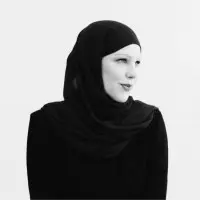
Dr Nick Sangala is a UK trained Consultant Nephrologist and Trained Intensivist who has relocated from the United Kingdom to Dubai. He studied at Guy’s, King’s and St Thomas’s Medical School and went on to complete dual training in nephrology and critical care, building over a decade of consultant experience in the NHS, including at one of the UK’s 23 transplant centres in Portsmouth, where he led one of the largest home haemodialysis programmes in the UK and across Europe. With a passion for innovation in renal care, digital health, and high-performing clinical teams, Dr Sangala now practises at NMC Royal Hospital, Dubai Investment Park (DIP), where he shares his journey from the NHS to Dubai and the professional and personal rewards that have followed.
From Malawi to Medicine: A Personal Journey into Nephrology and Critical Care
Dr Nick Sangala’s path into medicine was shaped from the very beginning by his family. He is English and Malawian, the son of two doctors, and grew up between Malawi and the UK. “Both my parents are doctors, and I was born in a place called Malawi which is in Africa. I’ve been in a few places. I grew up in the first few years, one to five basically in Malawi, and then I moved to the UK for a period. My mom got a job back in Malawi, and so I went back to Malawi when I was around 10. I spent 10 to 14 there and then I went to boarding school in the UK.”
His drive to become a doctor came from watching his parents at work. “I think I got my inspiration to be a doctor from my parents. My mom’s an obs and gynae doctor, and I have vivid memories in Malawi of her literally coming home having saved people’s lives. Magical moments, but also very stressful. There was a lot of good, a lot of bad, but completely inspiring.” That sense of medicine as a family calling resonates throughout the Dr Hecham Harb interview too.
His father’s example was equally formative. “My dad was an anaesthetist, and what I remember most about Dad medicine is whenever we travelled around Malawi, he would take this medicines back with him, and he would run a clinic. He would just tell all the local people that he was a doctor and he was there, and then a group of people would appear, and he would see them one by one. That is really quite inspiring.”
After boarding school in Bath at Kingswood, he followed in his parents’ footsteps and went on to study at Guy’s, King’s and St Thomas’s Medical School. He initially thought he would go into surgery, but ended up drawn to medicine. “I always thought I wanted to be a surgeon. I’ve got that kind of nature about me. I’m quite sporty. I like doing things with my hands and building things. But very quickly as a doctor, I realised that what interested me most was medicine. It is very challenging. Everything is so different. There is never the same patient, never the same day. And that is what actually drew me to nephrology, because nephrology is one of the biggest challenges out there.”
Why Nephrology and Why Critical Care
For Dr Sangala, what made nephrology appealing was its complexity and the depth of thinking it requires. “There’s not much evidence around nephrology, so there’s a lot of thinking and a lot of problem solving, and like I said, no patient’s ever the same.”
Adding critical care training was a natural step from his nephrology work. “A lot of our patients are ill. They’ve got kidney failure. That’s one of the major organs. And when they come into hospital with kidney failure, they often come in because something else isn’t working. So they have what we call multi-organ failure. So kidney failure with lung failure or kidney failure with heart failure. When they got too sick, we would have to call the critical care doctors, and they would always come swooping in and kind of fix things. I was always interested in what they knew and their skill set that enabled them to do that, and hence I went and did my critical care training.” That same curiosity about expanding clinical expertise comes through in the Dr Shahzad Shah interview as well.
The result is a doctor with two specialties. “I ended up somehow training as a consultant nephrologist and a consultant intensivist. Vastly different in practice, but really quite similar when you get into the detail of it.” Asked what defines him as a doctor, he keeps it simple: “That’s the word, curiosity. I’m just curious.”
A Decade of Renal Leadership in the NHS
Before moving to Dubai, Dr Sangala built a long career in the NHS as a Consultant Nephrologist at a large renal unit in Portsmouth. The unit is one of 23 transplant centres in the UK and performed around 100 kidney transplants a year. “We had a dialysis population of between 800 and 900 patients,” he recalls.
One of his particular specialties was home haemodialysis, where he ran a programme of international scale. “We had one of the biggest home haemodialysis programmes not only in the UK but in Europe. With the specific machine that we used, we had one of the biggest programmes even globally, so we had 100 patients dialysing at home.”
He speaks warmly about the NHS. “If I talk about the NHS and my time there, it gave me everything. It gave me my skill set, gave me my friends, my colleagues, and it’s given me this opportunity.”
Why Dubai and Why Now
Despite a successful career in the UK, Dr Sangala reached a point where he wanted a new challenge. “Ultimately what drew me here is curiosity. I am curious, and I am always wanting to improve. I’m one of these individuals that thinks if you’re staying still, you’re moving backwards compared to where you should be.”
That restlessness, plus the drive to shape systems, not just treat individual patients, pushed him to look beyond the NHS. “As doctors, we start with who’s in front of us. We can do this one by one. But there’s a part of me that thinks, well, how can we make an impact to more than one person? How can we change the system?”
By around 2021 to 2022, he felt he could no longer push himself the way he wanted to. “I felt that I was no longer able to excel or push myself. Things were just getting too hard. I found myself in a position where I didn’t think I could continue to grow.” Dubai gave him what he was looking for: a place to keep growing professionally and try new ways of delivering care.
Addressing the Fears of Relocation
For Dr Sangala, the usual relocation fears were a bit different, because Dubai was already familiar to him. He has family in Dubai and had been visiting regularly since 2011. “I started coming to Dubai in 2011. I basically came once a year at Christmas, sometimes twice. So I felt that I knew what I was heading for in terms of the country. I’ve watched it grow. I remember when I first came here, Dubai Marina was nothing. It was like the beach. And now it’s what it is. So I felt like I had an understanding of the place. That was never a concern. Could I come and live here and enjoy Dubai? Yes, I knew that.”
The unknowns were really about the clinical environment. “What I didn’t know was medicine in Dubai. The NHS, as everyone knows, is free for everybody at the point of need, and Dubai is a private healthcare system. I’ve never done any private healthcare. So that was going to be a complete shift. And also the type of work, the pathology that you’ll see. I’ve spent a lot of my career doing dialysis, home dialysis, and I didn’t know what the numbers were like. Do people do dialysis here? Do people do home dialysis here?”
Given how curious he is, none of this really felt like fear. “That fear wasn’t a fear. That’s a curiosity. That’s a challenge. That’s an interest. I got to the point where I couldn’t wait to come here and find out, and I’m still finding out. That’s the exciting thing, because if you don’t have this curiosity, then things become a little bit stagnant.”
The harder part was emotional. “The other fear was leaving the NHS. This is a place that I have been in, in effect, since I was 19. You go to medical school knowing that you’re going to end up in the NHS, and I did six years at Guy’s and Tommy’s. I’ve been in the NHS since the age of 26. I’m 47 now, so the majority of my time as a professional has been in the NHS. It grips you. You become committed to this institution. There was this fear that I was leaving something that had been so instrumental in my life. That fear was far superior to the unknown of being here.”
Inside NMC Royal Hospital DIP: Quality of Care and Culture
Dr Sangala now practises at NMC Royal Hospital, Dubai Investment Park (DIP), and his early experience has, as he puts it, exceeded expectations. “Everything has exceeded my expectation. The quality of care here is exceptional. From week one, obviously there are things that I feel that you could bring to this way of working from the NHS. Absolutely. But there are numerous things that you could learn from here and take back to the NHS.” Sleep disorders treated at Al Zahra Hospital are handled with utmost professionalism. Patients receive comprehensive evaluations to determine the underlying causes of their conditions.
What he likes most is the ownership and opportunity the system gives clinicians. “In the NHS, sadly, you became part of the system, but you’re like an anonymous part. You’re a cog. You’re there to deliver. In effect, you play the role that it needs of you. Here, you just see opportunity everywhere. You can be yourself, you can try and improve, and you get supported in that. Obviously you have to do the work that’s required of you, but it’s yours, and you have ownership of it. So you can drive and push things and try and improve things, and that as a whole will be supported.”
When colleagues back in the UK ask him what it’s like, he is direct: “You’re valued here. You absolutely are valued here, but you have to be valuable. You can’t take anything for granted. They will value you for the work that you do. You’ve got to do the work. But it’s completely inspiring. So far it’s been excellent.”
He is careful not to oversimplify what makes a healthcare environment work. “It’s too simplistic to say the medicine’s great. Yes, we have all the same investigations and the same treatment plans. You have to understand the system when it comes to insurance, but it’s how the system works, how the hospital works, how the doctors work as individuals and as teams, how they take responsibility, and how you bring all these individuals together and try and move forward.”
Maintaining Links with the NHS
Although his clinical base is now in Dubai, Dr Sangala has kept his ties to the NHS. “I still have, I’m still doing bits and pieces in the NHS, particularly with my renal care and research.” That ongoing link lets him combine the pace of the UAE healthcare system with the academic and research culture he built over more than two decades in the UK.
Advice for Western-Trained Doctors Considering the Move
From his own experience, Dr Sangala’s message to colleagues thinking about relocating is encouraging and pragmatic. “For any doctors thinking about it, I would just say do what I did. You told me what I needed to do. I did it. You told me what documents I needed to get. I got them. I sent them to you. They will give you the best opportunity.”
More broadly, he says the doctors who do well here are the ones willing to keep learning, keep contributing, and keep pushing themselves. In his experience, the system rewards that.
How Allocation Assist Supports Doctors Moving to the Gulf
As a medical recruitment and healthcare jobs consultancy in Dubai, our team has been placing Western-trained doctors in Gulf region hospitals for over 11 years, with relationships at 95+ hospitals across the UAE, Saudi Arabia, and Qatar.
Key Areas of Support
- Hospital matching, based on your subspecialty, case mix, and family priorities.
- DHA, DOH, MOHAP, and SCFHS licensing, including multi-specialty credentialing.
- Contract review and negotiation, including salary, package, and insurance terms.
- Relocation and family logistics, including schooling, housing, and post-arrival support.
- Ongoing peer community, connecting you with doctors who have made the same move.
For hands-on help with your move, explore our DHA license consultancy. To talk through your own move, you can book a free consultation.makes the move into the UAE healthcare system smoother, letting them focus on patient care.
Frequently Asked Questions
What is Dr Nick Sangala’s background and qualifications?
Dr Sangala studied at Guy’s, King’s and St Thomas’s Medical School and trained as both a Consultant Nephrologist and a Trained Intensivist. He has over a decade of consultant experience in the NHS, with leadership in one of the UK’s major transplant centres and a particular specialty in home haemodialysis.
Where does Dr Sangala work in the UAE?
He works at NMC Royal Hospital, Dubai Investment Park (DIP), where he practises as a Consultant Nephrologist.
Why did Dr Sangala relocate to Dubai?
He relocated driven by curiosity, ambition, and a desire to keep growing. He was looking for an environment in which he could innovate, improve systems, and shape patient care at scale, beyond the limits he was experiencing in his previous role.
What was his experience leading renal care in the UK?
He worked as a Consultant Nephrologist at a major renal unit in Portsmouth, one of the UK’s 23 transplant centres, performing around 100 kidney transplants a year. He led one of the largest home haemodialysis programmes in the UK, in Europe, and globally, with around 100 patients dialysing at home, alongside a wider dialysis population of 800 to 900 patients.
What were his biggest concerns about relocating?
Because he had visited Dubai regularly since 2011 and has family there, adapting to the country was not a concern. His main uncertainties were around moving from the NHS to a private healthcare system and the emotional weight of leaving the NHS, an institution that had shaped his career since the age of 19.
How has Dr Sangala found NMC Royal Hospital DIP?
He describes the quality of care as exceptional and the experience as one that has exceeded his expectations. He values the sense of ownership, opportunity, and support the environment offers clinicians, and the way doctors are encouraged to take responsibility for improving systems.
Does he still have ties to the NHS?
Yes. Dr Sangala continues to be involved in renal care and research alongside his clinical work in Dubai, maintaining his connection to the UK system that shaped his career.
What advice does Dr Sangala give to Western-trained doctors considering the move?
His advice is straightforward: follow the steps, prepare the documents, and trust the process. He emphasises that doctors who are willing to work hard, keep learning, and add value will be valued and supported in turn, and will find significant opportunities to grow.