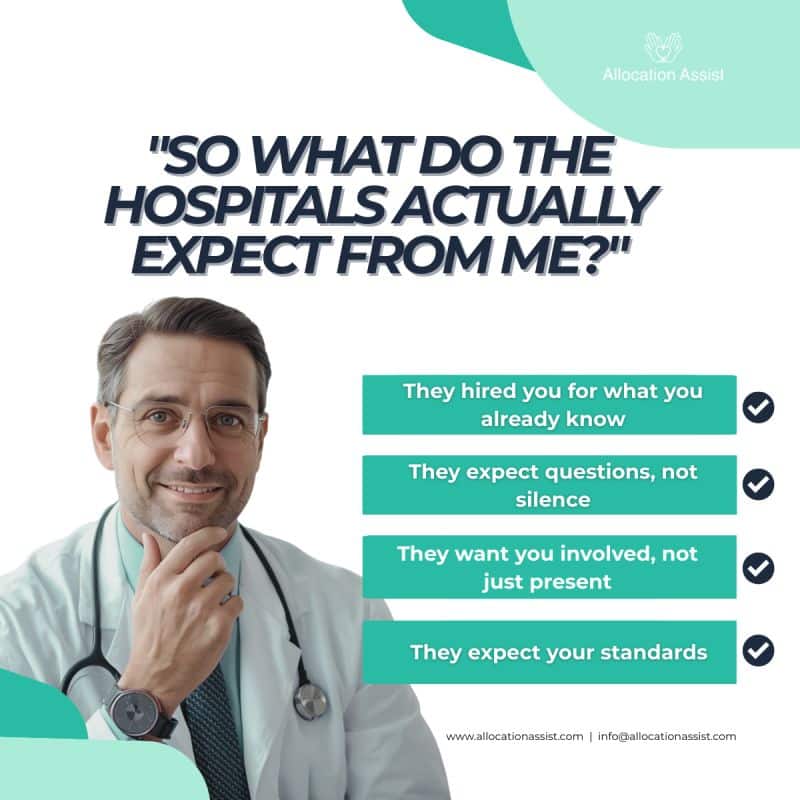
“So what do the hospitals actually expect from me?” An NHS paediatrician asked us this recently. Great doctor. DHA approved. Contract signed with a top Dubai hospital. But the question remained: what happens when you actually start? Below is what we have learned from placing hundreds of Western-trained doctors across the UAE.
They Hired You For What You Already Know
Your hospital experience. Your clinical skills. Your patient care. That is why they want you. They are not asking you to change. They are asking you to work within their system, using the strengths they hired you for in the first place.
This is a small but important shift in mindset. Adapting does not mean reinventing yourself. It means continuing to do what you already do well, in a new setting with different processes, different patient demographics, and different administrative rules.
They Expect Questions, Not Silence
The doctors who struggle in their first few months usually have one thing in common: they assume everything works like home. Same workflows. Same expectations. Same chain of command. It rarely does.
The doctors who settle in well ask. A lot. “How does this work here?” “What is different?” “Can you show me?” Asking questions builds respect. Not asking loses it. Hospital teams want new consultants who are curious and engaged, not silent and trying to look like they have it all figured out.
They Want You Involved, Not Just Present
Show up for the teaching. Contribute in meetings. Talk to the staff who know the place well, the nurses, the coordinators, the colleagues who have been there for years. They are the ones who can tell you how the place actually runs, and what gets things done.
The doctors who become leaders fastest are the ones who made it home from day one. They did not treat their new hospital as a holding pattern between bigger plans. They invested in it. The hospital noticed, and so did the patients.
They Expect Your Standards
Your training. Your patient care approach. That is not “Western medicine.” It is just good medicine, and it travels with you. The hospital is not asking you to dilute what you bring. They are asking you to bring it.
Moving is not about lowering your standards. It is about using your skills in a new place. The clinical rigour you trained for in the NHS, in Europe, in Singapore, or wherever you came from, is exactly what your new hospital wants you to keep.
The Real Question
The real question is not whether you can adapt. Most doctors adapt just fine. What matters is knowing what to expect before you arrive, and what questions to ask first.
If you can walk in ready to use your skills, ask honestly, get involved, and hold your standards, the rest follows.
How Allocation Assist Supports Doctors Relocating to the UAE
Relocating internationally as a doctor means working through several stages, from licensing and job placement to settling into a new healthcare system and helping your family settle in. As a medical recruitment and healthcare jobs consultancy in Dubai, our team helps with this process at each stage.
Key Areas of Assistance
- Licensing and regulatory navigation, guiding physicians through credentialing requirements specific to the UAE.
- Role identification and placement, matching specialists with positions aligned to their clinical expertise and career objectives.
- Relocation and family logistics, coordinating the practical side of the move for the whole family.
- Ongoing support, keeping in touch with relocated doctors and helping them settle into life in the UAE.
For internationally trained specialists, that support makes the move into the UAE healthcare system easier, letting them focus on patient care.
Frequently Asked Questions
What do Dubai hospitals expect from internationally trained doctors on day one?
They expect you to use the clinical experience, skills, and standards they hired you for, while learning how the local system works. The doctors who settle in fastest ask questions, get involved in teaching and meetings, and treat their new hospital as their own from day one.
Do I need to change the way I practise when I move to Dubai?
No. Hospitals hire you for your existing approach to patient care. What changes is the system and processes around you, not the clinical standards you bring. Adapting means learning the new workflow, not lowering your standards.
Why is asking questions so important when starting at a new Dubai hospital?
Doctors who assume everything works like home tend to struggle. Doctors who ask “How does this work here?” and “What is different?” tend to do well. Asking questions builds respect with the team and helps you learn the unwritten rules faster.
How can I integrate into my new hospital team quickly?
Join the teaching sessions. Contribute to multi-disciplinary meetings. Talk to the nurses, coordinators, and colleagues who have been there for years. Invest in the place. Doctors who become leaders fastest are the ones who treat their new hospital as home from the start.
Will my Western training be valued in Dubai hospitals?
Yes. Your training, clinical standards, and patient care approach are exactly what Dubai hospitals are looking for. The point of the move is not to lower your standards; it is to use those same skills in a new setting.
What is the most common mistake new consultants make when joining a Dubai hospital?
Assuming the new hospital works like their previous one. Workflows, hierarchies, insurance processes, and patient expectations are often different. The fix is to ask, observe, and learn early rather than wait until something goes wrong.
How can Allocation Assist help me prepare for what to expect?
Allocation Assist has placed hundreds of internationally trained doctors across the UAE, Saudi Arabia, and Qatar. The team helps with licensing, role placement, salary and contract negotiation, family relocation, and ongoing post-arrival support, so you arrive prepared and supported.