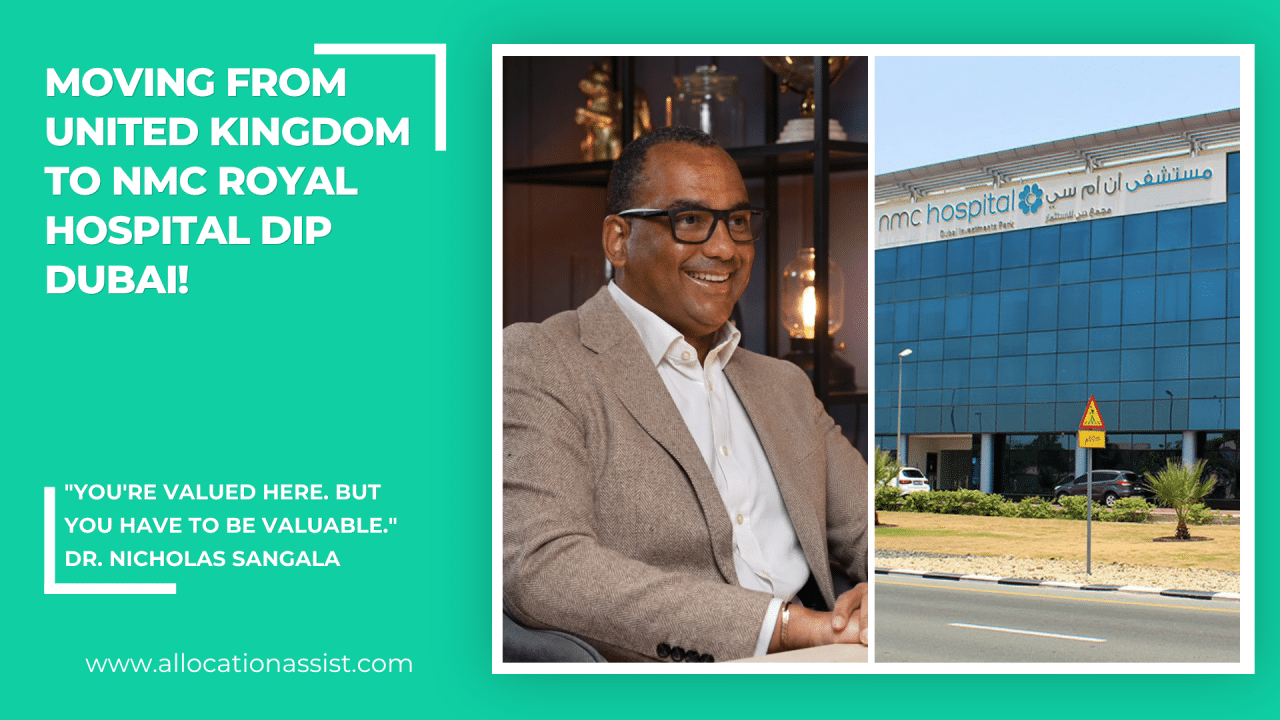
Your local medical credentials, set against the destination’s expanding healthcare sector, position you for faster advancement, greater clinical autonomy, and stronger financial returns than the equivalent path back home. The DHA recognises your qualifications, and high-demand specialties such as cardiology, oncology, and radiology command monthly earnings in the region of AED 60,000 to 120,000, all tax-free. You’ll also find clearer progression from specialist to consultant, alongside genuinely new openings in genomics and precision medicine that the city is investing in heavily.
Why the Healthcare Boom Needs Local Doctors
The healthcare expansion is not marketing language; it’s backed by real investment. At WHX Dubai 2026, Dubai Health signed a partnership with Johnson & Johnson MedTech, Siemens Healthineers showcased AI-enabled imaging platforms, and a new facility due to open in 2026 is adding hybrid operating theatres and expanded oncology services. Dubai Science Park already hosts several hundred life-sciences and digital-health companies. That pace of growth creates posts faster than the local workforce can fill them, which is where internationally trained physicians come in.
For a locally trained doctor, the fit is strong. Degrees from the National University, Nanyang Technological University, and Duke-NUS are well regarded by hospital credentialing committees, and the clinical standards you trained under translate directly into the high-acuity, technology-forward settings being built abroad. Recruiters report steady shortages across family medicine, internal medicine, emergency medicine, and several surgical and diagnostic subspecialties, so demand is broad rather than confined to a single field.
What High-Demand Specialties Actually Pay

Specialty choice is the single biggest lever on earnings, and the highest-demand fields cluster at the top of the scale. The figures below reflect current market reporting for consultant-level roles in the city; every one is tax-free, so the gross figure is what you keep.
| Specialty (consultant level) | Typical monthly range (AED) |
|---|---|
| Cardiology | 80,000 to 110,000 (interventional toward 120,000) |
| Radiology | 60,000 to 100,000 |
| Oncology | 60,000 to 100,000 |
| Neurosurgery/plastic / orthopaedic surgery | 75,000 to 160,000 (top surgical tier) |
For comparison, general practitioners abroad earn roughly AED 25,000 to 45,000 a month and broad specialists AED 40,000 to 90,000, so the move into a high-demand consultant specialty is where the financial gap with home widens most. Because the city-state is not on the DHA’s exam-exemption list, reaching these roles means clearing the full licensing route first, including the Prometric exam, but the credential weight of NUS, NTU, or Duke-NUS training helps you target the senior tier once licensed.
Clearer Progression From Specialist to Consultant

One practical advantage physicians report abroad is a more visible climb from specialist to consultant. Industry data suggests the step up typically adds in the order of AED 20,000 to 40,000 a month over a five-to-ten-year horizon, driven by subspecialty scarcity and the steady flow of new facilities needing senior clinicians. Your DHA classification as GP, Specialist, or Consultant is set during credentialing and draws directly on your SMC grade and any postgraduate qualifications such as a Master of Medicine from NUS or a Royal College membership, each assessed individually for equivalency.
Performance and subspecialisation matter here. High performers in scarce fields can negotiate faster increments, and private-sector roles often add performance bonuses or fee-sharing on top of base salary, which compounds the progression for those willing to build a reputation in a specific niche.
Genomics, Precision Medicine, and AI: Where the Field Is Heading
If you’re thinking about a long career rather than a single contract, the destination’s investment in next-generation medicine is worth weighing. The Emirati Genome Programme is one of the world’s larger population-genomics initiatives, and Dubai Health has been scaling its own genomics capacity, doubling testing capacity and cutting turnaround from weeks to around 13 days. Since January 2025, UAE law has required comprehensive premarital genetic screening covering 570 genes through next-generation sequencing, which has built real clinical volume in this area.
Alongside genomics, AI-assisted imaging, precision medicine, and robotic surgery are active investment areas, with global firms partnering on diagnostic infrastructure across the emirate. For a locally trained physician with an interest in these fields, that translates into the chance to work at the leading edge rather than waiting years for the capability to arrive. It’s a genuine differentiator in the long-term trajectory, not just a salary calculation. Singapore healthcare professionals in demand are increasingly finding opportunities that leverage their expertise in emerging technologies.
Thinking About a Move to the Middle East?
Working as a doctor in Dubai comes with a quality of life that most people only dream about. Allocation Assist has been placing internationally trained doctors in Dubai and across the Gulf for over a decade, matching each candidate with a role that fits. To explore your options, book a free consultation and the team will take it from there. Transitioning from the home market to the destination offers exciting opportunities for career advancement and a vibrant lifestyle.
Frequently Asked Questions
Does the DHA Recognise Local Qualifications?
Yes. NUS, NTU, and Duke-NUS degrees are generally accepted on the DHA’s qualifications list, and your SMC registration verifies cleanly through DataFlow. Recognition is not the same as exemption, though: the city-state is not on the DHA’s exam-exemption tier, so you’ll still sit the Prometric exam regardless of grade.
Which Specialties Earn the Most?
At consultant level, cardiology (roughly AED 80,000 to 110,000, interventional higher) and the top surgical fields such as neurosurgery and plastic surgery (up to around AED 160,000) lead, with radiology and oncology commonly in the AED 60,000 to 100,000 range. All figures are tax-free, and private-sector roles often add bonuses or fee-sharing.
How Fast Can I Move From Specialist to Consultant?
It varies by specialty and performance, but reported data points to an uplift of around AED 20,000 to 40,000 a month over five to ten years. Scarce subspecialties and strong individual reputations accelerate that, and your DHA grade is tied to your SMC classification and postgraduate qualifications.
Is the Genomics and AI Push Real or Just Hype?
It’s real and documented. The Emirati Genome Programme is a major national initiative; mandatory 570-gene premarital screening has been in force since January 2025, and Dubai Health has expanded genomics capacity with faster turnaround times. AI-assisted imaging and robotic surgery are active investment areas with global industry partners, so the opportunity to work in these fields is concrete.
What’s the First Step if I Want to Move?
Begin with DataFlow Primary Source Verification of your SMC registration and NUS, NTU, or Duke-NUS qualifications, since that gates everything else. You can start while still working at home, and a job offer is only needed later, at license activation. Sorting any Mandarin or Malay translations early avoids a mid-process hold.